


Category: Uncategorized
Free Rooftop Solar in Delhi: What Homeowners Need to Know
Can you get solar installed for free? What subsidy is available? And how do you apply? Here’s a simple guide.

Delhi’s rooftop solar scheme can help you turn your roof into a source of electricity for your home. Some eligible households can get a solar system installed free of cost. Others can receive government subsidies to reduce what they pay.
The first step is to check your electricity consumption.
Can I get solar installed for free?
If your average monthly electricity consumption was up to 400 units during April 2025–March 2026, you may qualify for a free 2 kW or 3 kW rooftop solar system.
Your eligibility will be checked using your electricity connection details. A site visit will also confirm whether your roof is suitable for installation.
What if I use more than 400 units a month?
You can still apply for solar and receive financial support.
Eligible homeowners can get:
- Central government subsidy: up to ₹78,000
- Delhi government subsidy: up to ₹78,000
That means total support of up to ₹1.56 lac. You pay the remaining system cost after the applicable subsidies. The actual subsidy depends on the system capacity, scheme rules and the cost determined through the government tender.
Who will install the solar system?
For installations through the government scheme, the government selects solar companies through a tender.
You do not need to take part in the tender. You submit your application and consent. The selected company then visits your home, checks your roof and arranges installation if your property qualifies.
How do I apply?
Visit the official Delhi Solar Portal and keep these ready:
- Your latest electricity bill, showing your CA or Consumer Account number
- Your mobile phone for OTP verification
- Your home and rooftop details
Follow the application steps, review the consent terms and submit the form. Save your application reference number.
Applying does not mean installation is immediately confirmed. Your eligibility and rooftop suitability must be checked first.
What should I ask when the company visits?
Use the site visit to understand how solar will fit into your home. Five simple questions can help:
- Where will the panels go, and how much terrace space will they occupy?
- Will I still have access to my water tank and other parts of the roof?
- How will the panels be fixed securely without causing roof leakage?
- Which panels and inverter will be installed?
- Who will handle maintenance and service, and what is covered?
Ask for the equipment details, installation scope and service terms in writing.
Can I choose my own solar company?
Under the government-led scheme, installation is carried out by a company selected through the tender.
You can also explore a direct installation through an empanelled solar vendor. Before booking, confirm the subsidy available for your installation and how the payment process will work.
Need help understanding your options?
Your electricity bill and a rooftop assessment are the best starting points.
With 10 years of solar experience and 4000+ projects, MYSUN can help you understand your solar requirements and explore a suitable solution for your home.
Share your electricity bill with MYSUN to get started.
Net Metering in Delhi 2026: Rules, Process, Savings & PM Surya Ghar Benefits Explained
Imagine it's a typical weekday morning in Delhi. You leave for work and your children head to school. The house is nearly empty, yet your rooftop solar panels continue generating electricity throughout the day under the bright Delhi sun. Now here's the question most of us must thought :
If nobody is using electricity during the day, what happens to all the extra power generated by my solar panels?
Does it get wasted? Do you lose it? Or does the electricity company pay you for it? The answer lies in something called Net metering.
For many homeowners, terms like net meter, DISCOM approval, grid synchronization, export units, and energy credits can sound technical and overwhelming. However, understanding net metering is essential because it directly impacts how much value you get from your rooftop solar system.
In this guide, we'll explain the latest net metering rules in Delhi, who is eligible, how the approval process works, how it connects with PM Surya Ghar Yojana, and how homeowners can maximize long-term solar savings.
Net Metering Rules in Delhi 2026: What Homeowners Need to Know
Let's understand this with a simple example. Imagine your solar system generates 20 units of electricity today, but your home only consumes 12 units. Instead of letting the remaining 8 units go unused, they are automatically sent to the electricity grid. Through net metering, those extra units help reduce the electricity you draw from the grid later.
This ensures that the electricity generated by your rooftop solar system continues creating value even when it is not being used instantly.
For installing rooftop solar under the PM Surya Ghar Yojana, net metering is an important part of the overall solar ecosystem, enabling better utilization of solar energy and improved savings.
Who Is Eligible for Net Metering in Delhi?
Net metering in Delhi is generally available to residential consumers who install a rooftop solar system and have a valid electricity connection in their name. Since solar regulations and eligibility requirements may evolve over time, homeowners should always review the latest residential rooftop solar policies applicable in Delhi before proceeding with installation. To be eligible, homeowners generally need:
- A valid electricity connection
- Adequate shadow-free rooftop space
- Property ownership or authorization documents
- A rooftop solar system that complies with utility requirements
Which DISCOM Handles Your Application?
The DISCOM responsible for processing your net metering application in Delhi depends on the location of your property.
| DISCOM | Full Name | Areas Generally Covered |
| BRPL | BSES Rajdhani Power Limited | South Delhi and West Delhi |
| BYPL | BSES Yamuna Power Limited | East Delhi and Central Delhi |
| TPDDL | Tata Power Delhi Distribution Limited | North Delhi and North-West Delhi |
| NDMC | New Delhi Municipal Council | NDMC service areas and parts of Central Delhi |
Tip: If you're unsure which DISCOM serves your area, check your electricity bill. The utility name is usually displayed at the top.
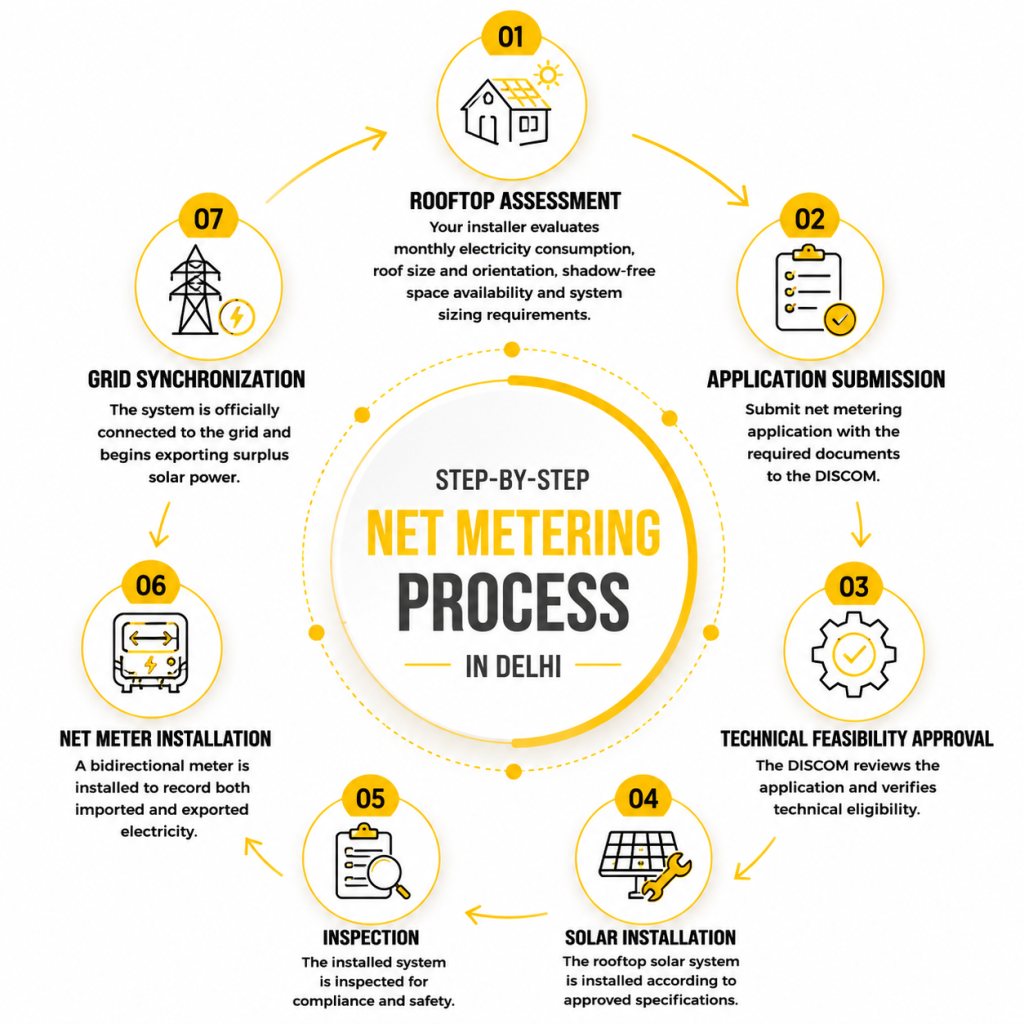
Step-by-Step Net Metering Process in Delhi
Step 1: Rooftop Assessment
Your installer evaluates:
- Monthly electricity consumption
- Roof size and orientation
- Shadow-free space availability
- System sizing requirements
Step 2: Application Submission
Homeowners who want a more detailed breakdown of inspections, approvals, and meter installation stages can also explore MYSUN's complete guide to the net metering process.
Pro Tip: Ensure that the mobile number linked to your electricity connection is active and updated. Most application-related OTPs and approvals are sent to this registered number.
Step 3: Technical Feasibility Approval
The DISCOM reviews the application and verifies technical eligibility.
Step 4: Solar Installation
The rooftop solar system is installed according to approved specifications.
Step 5: Inspection
The installed system is inspected for compliance and safety.
Step 6: Net Meter Installation
A bidirectional meter is installed to record both imported and exported electricity.
Step 7: Grid Synchronization
The system is officially connected to the electricity grid and begins exporting surplus solar power.
Before You Apply, Keep These Documents Ready
Most residential applicants typically need:
- Latest electricity bill
- Identity proof
- Address proof
- Property ownership documents
- Solar system specifications
- Application forms and declarations
Keeping these documents ready can help avoid unnecessary delays during the approval process.
How Long Does the Entire Process Usually Take?
While timelines may vary depending on the DISCOM and application completeness, most residential net metering applications are generally completed within 30–45 days.
Delays are often caused by:
- Incomplete documentation
- Mobile number mismatches
- Pending inspections
- Technical clarifications
Working with an experienced solar partner can help streamline the process.
How PM Surya Ghar Yojana Works with Net Metering
One of the most common misconceptions is that subsidy and net metering are two separate benefits. In reality, they complement each other. While the PM Surya Ghar Yojana helps reduce the upfront cost of installing solar, net metering helps you maximize savings after the system is installed. PM Surya Ghar Yojana Helps You:
- Reduce upfront installation costs
- Access government subsidy benefits
- Improve project affordability
Net Metering Helps You:
- Earn value from surplus solar generation
- Reduce electricity bills
- Improve long-term returns from your solar investment
Together, these benefits make rooftop solar significantly more attractive for residential consumers.
Real-World Impact: Do These Savings Actually Work?
Many of us still assume solar only works if someone is home during the day. However, net metering allows you to benefit from solar generation even when your house is empty.
Consider two typical Delhi households. One installed a 3kW rooftop solar system and previously paid around ₹6,000 per month in electricity bills. Another opted for a 5kW system and was spending more than ₹8,000 per month, primarily due to higher air-conditioning usage.
On average, their solar systems generated approximately 350–450 units and 600–750 units of electricity per month, respectively. Since both families were away during working hours, a large portion of the solar power generated during the day was exported to the grid through net metering.
The exported units were then adjusted against the electricity consumed during the evening and night, when the families returned home. As a result, their dependence on grid electricity reduced significantly, leading to lower monthly electricity bills and better overall returns from their solar investment.
Things Homeowners Often Get Wrong About Net Metering
| Myth | Reality |
| Solar will completely eliminate my electricity bill. | Savings depend on system size, consumption patterns, and applicable charges. |
| Extra solar power gets wasted. | Surplus electricity is exported to the grid and adjusted through net metering. |
| Solar only works if someone is home all day. | Working families benefit significantly because the daytime generation earns credits. |
| Net metering is complicated. | With the right solar partner, approvals and documentation are generally straightforward. |
Typical Solar Generation in Delhi
The amount of electricity generated depends on roof orientation, shading, weather conditions, and system performance. However, homeowners can use the following estimates as a reference:
| System Size | Estimated Monthly Generation | Estimated Annual Generation |
| 3kW | 350–450 Units | 4,500–5,400 Units |
| 5kW | 600–750 Units | 7,200–9,000 Units |
| 10kW | 1,200–1,500 Units | 14,000–18,000 Units |
These figures can help homeowners estimate the potential value of rooftop solar before making an investment decision.
Can Apartment Owners Benefit from Net Metering?
Yes, depending on the applicable regulations and project structure.Apartment residents and housing societies may be able to benefit through:
Group Net Metering: Allows a consumer with multiple electricity connections (e.g., an independent building owner with multiple floors/meters) to generate solar energy on one roof and distribute the solar net metering credits across separate electricity connections.
Virtual Net Metering: Designed for residential societies and apartments. Solar panels are installed on a communal rooftop or shared area, and the net metering benefits are split proportionally among the electricity bills of participating residents
These mechanisms help extend the benefits of rooftop solar beyond individual independent homes and encourage broader adoption across residential communities.
Why More Delhi Homeowners Are Choosing Solar in 2026
A few years ago, most homeowners viewed solar as something only environmentally conscious people installed. Today, the conversation has changed. Rising electricity bills, longer AC usage during Delhi summers, and government-backed schemes such as PM Surya Ghar have made solar a practical financial decision for many families. More homeowners are now looking at rooftop solar not just as a way to generate clean energy, but as a way to gain greater control over future electricity expenses.
When combined with net metering, rooftop solar becomes more than just an energy solution—it becomes a long-term financial investment that helps homeowners gain greater control over their electricity costs.
Final Thoughts
If you've been considering rooftop solar but felt unsure about how net metering works, you're not alone. It's one of the most common questions homeowners ask before making the switch. The good news is that once you understand how surplus electricity is credited and adjusted, the concept becomes surprisingly straightforward. More importantly, it helps ensure that every unit generated on your roof continues working for you. For Delhi homeowners exploring solar in 2026, understanding net metering today can help you make a smarter investment tomorrow.
Don't let upfront costs keep your household locked into paying high electricity bills. So whether you're exploring subsidy eligibility, net metering approvals, or system sizing, MYSUN can help simplify the entire process. Let our regional NCR experts design a zero-stress financial path to total energy independence.
📞 Contact our solar advisors today: 8448380218
📧 Email: [email protected]
👉 Try the MYSUN Solar Calculator to check your savings now.
Is Solar Worth in 2026? ROI & Payback Period Explained
A few years ago, rooftop solar felt like one of those “future” things people talked about but rarely installed.In 2026, that has changed completely.Now the conversation usually starts after someone opens a summer electricity bill in Delhi NCR, Gurgaon, Noida, or Faridabad and says:
“Yeh bill itna kaise aa gaya?”
And honestly, that reaction makes sense.Electricity prices are rising, AC usage is increasing every summer, and families are looking for ways to control long-term monthly expenses. That is exactly why rooftop solar is becoming less of an environmental decision and more of a financial one. But before installing solar, almost everyone asks the same thing: “Is it actually worth the investment?”
The short answer is yes — for many Indian homes, rooftop solar in 2026 offers one of the strongest long-term returns among household investments. But the real answer depends on your electricity usage, rooftop condition, and system size.
Let’s understand the real math behind it.
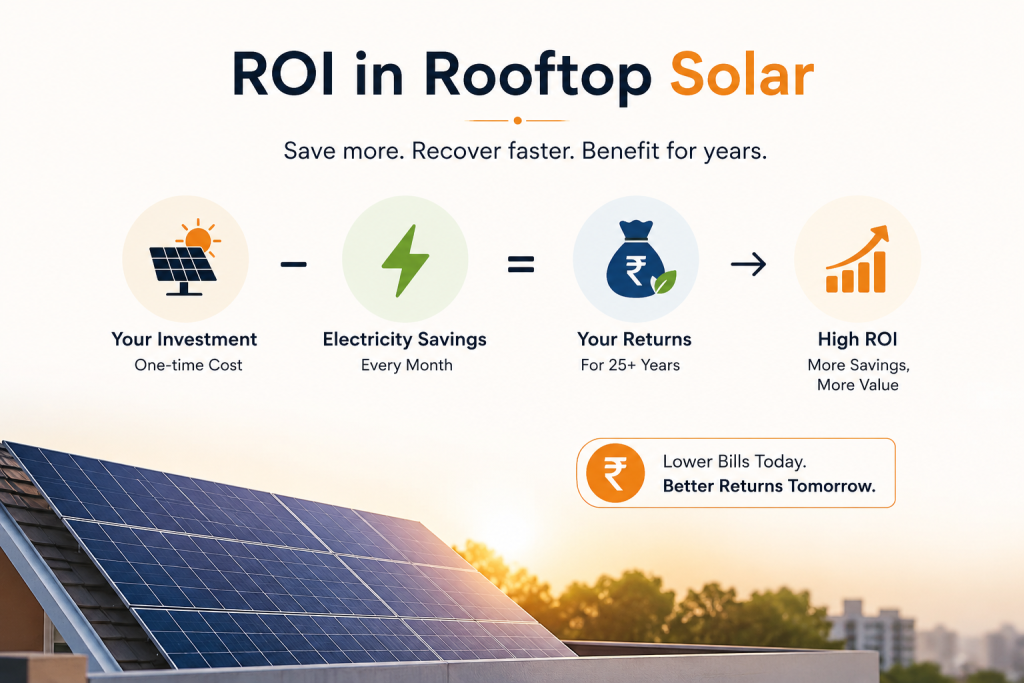
What does ROI actually mean in rooftop solar?
“Most homeowners don’t actually care about financial terms like ROI. What they really want to know is simple:‘Aaj paisa lagaunga toh wapas kab aayega?’”
- how much money you spend on installing the system
- versus how much you save on electricity bills over time
The second term people hear often is “payback period.” That simply means:
How long it takes for your electricity savings to recover your solar installation cost.After the payback period ends, the electricity your system generates becomes mostly savings for the next 20–25 years.
Why rooftop solar makes more financial sense in 2026
And honestly, this calculation looks very different in 2026 compared to a few years ago.Because the economics of rooftop solar have changed rapidly
1. Electricity bills are rising fast
Across India, urban electricity tariffs continue increasing because of fuel costs, peak demand, and infrastructure pressure. In cities like Delhi NCR, many households now pay ₹8–₹10 per unit in higher slabs.
2. Government subsidy reduced upfront cost
Under the PM Surya Ghar Yojana, homeowners can receive subsidies up to ₹78,000 for residential rooftop systems.
3. Solar technology improved
Modern N-Type TOPCon panels are more efficient and degrade slower than older systems, improving long-term generation and savings.
That combination has made rooftop solar far more financially attractive than it was even five years ago.
Average solar payback period in India (2026)
Naturally, the next question homeowners ask is:‘Theek hai savings hogi… but kitne time mein investment recover hoga? Here’s what homeowners are commonly seeing in 2026:
| System Size | Typical Home Type | Average Payback |
| 2–3 kW | Small to medium families | 4–5 years |
| 3–5 kW | AC-heavy homes | 3.5–5 years |
| 5–10 kW | Large homes & EV users | 5–7 years |
The exact timeline depends on:
- monthly electricity bill
- sunlight availability
- rooftop shadow
- subsidy eligibility
- and installation quality
But overall, solar payback periods are now shorter than ever before in India.
Of course, these numbers vary from home to home depending on electricity usage and rooftop conditions.
That’s why many homeowners now use solar ROI calculators to estimate their own long-term savings more realistically ? Explore MYSUN’s detailed guide on Solar ROI & Payback Period to calculate long-term savings, understand real payback timelines, and see how much you can potentially save with rooftop solar in 2026.
Real example: How savings actually work
Every summer, Mr. Sushil Sharma from Greater Noida saw his monthly electricity bill reach around ₹5,500 due to heavy AC usage. Before deciding to install solar, he visited the MYSUN Solar Calculator and entered his location and monthly electricity bill.
Within minutes, the calculator recommended a 5.4 kW rooftop solar system based on his consumption pattern and location.
The report showed that his monthly electricity bill could reduce from ₹5,500 to approximately ₹666, helping him start saving around 88% from Day 1.
The calculator also estimated a total system investment of around ₹2.8 lakh, an expected payback period of just over 5 years, and lifetime savings of approximately ₹13.8 lakh over 25 years.
Seeing these numbers gave Mr. Sharma the confidence to go solar with MYSUN. Today, he's enjoying significantly lower electricity bills while generating clean energy for his home. And once the investment is recovered, the electricity generated over the remaining life of the system translates into long-term financial savings.
Why people now compare solar with investments
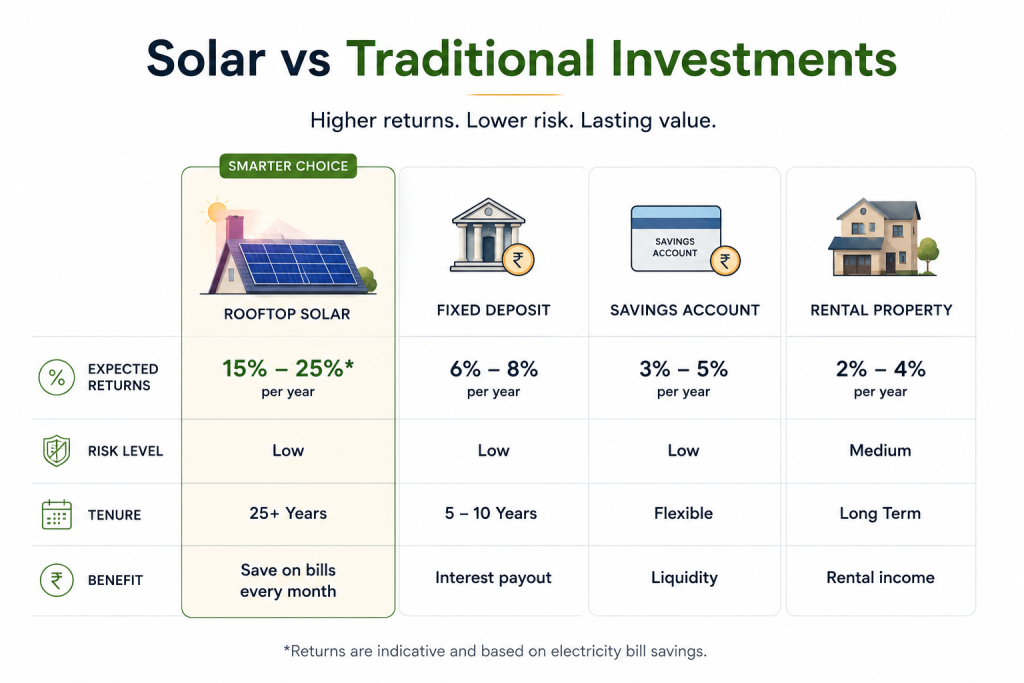
This is where the conversation becomes interesting. Earlier, homeowners looked at solar as an expense. Now many people see it as an asset.Because unlike a car or appliance, a rooftop solar system keeps generating financial value every single month. Solar companies like MYSUN now estimate rooftop solar ROI in the range of 15–25% annually through electricity savings, which is often higher than:
- Fixed Deposits
- traditional savings plans
- or rental yield from real estate investments
And unlike market-linked investments, solar savings are directly tied to reducing your household expenses.
What affects your solar ROI the most?
Not every home gets the same savings. Here are the biggest factors:
- High electricity usage :- Homes with bills above ₹4,000–₹5,000 usually recover costs faster.
- Good sunlight exposure:- Less shade means higher power generation.
- Proper system sizing:- Oversized systems can reduce financial efficiency.
- Quality installation:- Poor wiring, cheap components, or bad engineering can reduce long-term performance.
So, is rooftop solar worth it in 2026?
For many Indian households — yes, absolutely.Especially if:
- your electricity bills keep rising
- you use multiple ACs
- you work from home
- or you plan to buy an EV in the future
The biggest mindset shift happening in 2026 is this:People are no longer asking:
“Can solar save electricity?”
They already know it can. Now they are asking:
“How much money am I losing every year by delaying it?”And honestly, that may be the biggest reason rooftop solar adoption is accelerating so quickly across India today.
Conclusion
In 2026, rooftop solar is no longer just about “going green.” For many families across Delhi NCR, it has become a smart financial decision that offers long-term savings, protection from rising electricity costs, and greater peace of mind during harsh summers.
The biggest reason people are switching is simple: the numbers finally make sense. With improving technology, government subsidies, and increasing electricity tariffs, rooftop solar now delivers a realistic payback period along with years of future savings.
But beyond ROI and calculations, solar is also about control. Control over your monthly bills. Control over future energy costs. And control over building a more sustainable lifestyle for your family.
MYSUN isn't just installing solar panels; we're building a sustainable future for Delhi NCR. We're dedicated to providing exceptional service, from the initial consultation to ongoing maintenance. We're here to answer your questions, address your concerns, and guide you through your solar journey.
Explore More:
- Learn More About Solar Subsidy Plans in Delhi NCR
- Calculate Your Solar Savings
- MYSUN’s detailed guide on Solar ROI & Payback Period
Ready to embrace the sun?
Contact our solar advisors today for a complimentary consultation:
📞 +91 8448380218
📧 [email protected]
Or visit: MYSUN Official Website. Let's shine brighter, together. Share your thoughts and experiences in the comments below!
Easy EMI Solar in Faridabad & Ghaziabad: Cost, EMI, Subsidy & Savings Explained (2026 )
When Rajesh Sharma from Ghaziabad saw his June electricity bill, he couldn't help but sigh.
The number ₹6,000 stared back at him — again. With two air conditioners, a refrigerator, washing machine as well as other household appliances such as summer bills had become a monthly headache. Similar to other homeowners in Faridabad and Ghaziabad, Rajesh had heard about rooftop solar. Neighbours were installing panels, social media was buzzing with solar savings, but one thought held him back:
"Solar sounds good, but I don’t want to spend ₹2–3 lakh in one go."
This is the exact concern thousands of families share. And it’s why solar on EMI in NCR has become the game‑changer.
Why More Homeowners Are Choosing Solar on EMI
When Rajesh first began getting quotes, the numbers felt incredibly scary. Local installers kept throwing around massive setup costs. Like most family-budget managers, his immediate reaction was simple —"Solar sounds great, but where will I arrange this much money from?"
That’s where solar EMI and financing options in India come in. Just like buying a car or smartphone, you can now install solar and pay in easy monthly installments — while your system starts generating savings from day one. Instead of paying a power company every month, many homeowners are using that same amount to pay an EMI and gradually own a solar asset that can generate electricity for the next 25 years.
Think about it this way:
- A ₹5,000–₹7,000 electricity bill disappears forever.
- A ₹5,000–₹7,000 solar EMI helps you own a rooftop power plant.
Solar Cost in Faridabad & Ghaziabad (2026)?
The cost depends on your electricity consumption and rooftop space.
Estimated Residential Solar Cost (2026)
| System Size | Suitable For | Approx Cost | PM Surya Ghar Subsidy | Approx Cost After Subsidy |
| 1 kW | Small Home | ₹70,000 | ₹30,000 | ₹40,000 |
| 2 kW | 2 BHK Home | ₹1,20,000 | ₹60,000 | ₹60,000 |
| 3 kW | 3 BHK Home | ₹1,80,000 | Up to ₹78,000 | ₹1,02,000 |
| 5 kW | Large Home/Villa | ₹2,90,000–₹3,35,000 | Up to ₹78,000 | ₹2.12–₹2.57 lakh |
Actual pricing depends on panel technology, inverter brand, roof structure, net metering requirements, and installation complexity.The numbers looked far more manageable after accounting for the PM Surya Ghar subsidy.
EMI vs Electricity Bill: The Real Comparison
When he explored a 3 kW rooftop solar system, the numbers started making sense. After applying the PM Surya Ghar subsidy, the cost came down to around ₹1.02 lakh. With financing, his monthly EMI worked out to approximately ₹3,290 for three years.
His EMI was actually lower than what he was already spending on electricity every month. Instead of paying the power company, he was gradually paying towards owning a solar system that could generate electricity for the next 25 years. A friend in Faridabad had a larger home and electricity bills touching ₹8,000 every month. He opted for a 5 kW solar system. After subsidy, the project cost was around ₹2.57 lakh, and the EMI came to roughly ₹5,000–₹5,500 per month. The interesting part? His monthly electricity savings were almost equal to the EMI amount.
That's when Rajesh realized something important — solar wasn't creating a new expense. It was simply replacing an existing one.
| System Size | Approx Cost After Subsidy | Approx EMI* | Estimated Monthly Savings |
| 3 kW | ₹1.02 Lakh | ₹3,290 | ₹2,500–₹3,000 |
| 5 kW | ₹2.57 Lakh | ₹5,000–₹5,500 | ₹5,400–₹6,000 |
Curious about long‑term returns? Explore our detailed guide on] [Solar ROI & Payback in NCR ]
Your Solar Loan & EMI Choices in 2026
You don’t need a special loan. Today, several banks and NBFCs offer solar financing in India such as Bank Solar Loans, NBFC Financing,Installer-Financed EMI Plans & Zero Down Payment Solar Programs. Popular lenders in Faridabad & Ghaziabad include SBI, HDFC Bank, Axis Bank, Tata Capital, L&T Finance, Hero FinCorp, Aerem, and ECOFY. Many of these lenders now offer dedicated rooftop solar financing solutions.
Loan tenures generally range from 3 to 7 years, while interest rates can vary based on lender, credit profile, and loan amount. For a complete overview of solar buying and financing options, check out our MYSUN FAQ on Solar Financing.
Is Zero Down Payment Solar Really Possible?
One of the biggest myths around solar is that you must arrange a large down payment.In reality, some financing solutions now allow homeowners to begin the project with little or no upfront burden.Since subsidy amounts vary by system size and eligibility, it's important to understand the latest subsidy structure before finalizing your project. MYSUN has a detailed breakdown of rooftop solar subsidies available in Delhi, UP and Haryana Delhi, UP and Haryana .Many customers use that subsidy amount to reduce their outstanding loan amount, lower their EMI, or shorten the repayment tenure.For families trying to manage household budgets carefully, this has made rooftop solar far more accessible.
Why Faridabad & Ghaziabad Are Perfect for Rooftop Solar
Faridabad and Ghaziabad have seen rapid residential growth over the last decade.
At the same time:
- Electricity consumption continues to rise.
- Summer power bills often become a major household expense.
- Most independent homes have usable rooftop space.t
- Solar generation remains strong for most of the year.
To understand how rooftop solar works step‑by‑step? Check out our Solar Essentials Guide for everything you need to know.
What Should Homeowners Check Before Taking a Solar Loan?
Before finalizing a solar EMI plan, make sure you check:
- Subsidy eligibility
- Loan processing fees
- Prepayment charges
- Panel and inverter warranty
- Installer credentials
- AMC and after-sales support
- Net metering assistance
The quality of installation matters just as much as financing. A properly designed system will generate better savings and improve your overall return on investment.
MYSUN: Your Partner in NCR’s Solar Revolution
For families across Faridabad and Ghaziabad, the core question is no longer about whether clean energy technology works. The real question is whether it makes financial sense to keep paying rising utility bills forever when highly flexible financing options can eliminate them.
With accessible PM Surya Ghar subsidy programs, flexible solar loans through specialized partners, and repayment terms reaching up to 7 years, shifting your home to clean energy has never been this straightforward. Once those temporary monthly payments wrap up, your private generation savings continue entirely unhindered.
During his own research, Rajesh Sharma ultimately bypassed standard sales pitches and reached out directly to the advisory team at MYSUN. What changed his mind wasn't marketing claims, but transparent clarity regarding his home's specific subsidy eligibility, precise physical system sizing, and direct integration with local financing partners.
Don't let upfront costs keep your household locked into paying high electricity bills. Let our regional NCR experts design a zero-stress financial path to total energy independence.
📞 Contact our solar advisors today: 8448380218
📧 Email: [email protected]
👉 Try the MYSUN Solar Calculator to check your savings now.
3kW vs 5kW Solar in Gurgaon: Which System Fits Your Home?
When Amit, a homeowner in DLF Phase 4, Gurgaon, received his June electricity bill, it crossed ₹7,000 yet again.With three air conditioners running through the summer, work-from-home equipment, and daily household usage, electricity costs had become one of the biggest recurring expenses for his family. Like many homeowners across Gurgaon, he had already decided to install rooftop solar.
The only question was: Should he choose a 3kW solar system or a 5kW solar system?
If you're exploring solar for your home in Gurgaon, chances are you're facing the same confusion.The good news is that the answer is usually simpler than most people think.
Why Gurgaon Homeowners Are Going Solar Faster
Electricity consumption in Gurgaon is different from many other cities.Long summers, heavy AC usage, rising electricity tariffs, and larger homes mean that monthly bills can quickly climb above ₹5,000–₹8,000.
Whether you live in New Gurgaon, a builder floor in Sector 56, or a villa in DLF, your electricity usage is likely much higher during peak summer months.This is exactly why rooftop solar adoption has increased significantly across the city.But before installing solar, it's important to understand which system size matches your consumption.
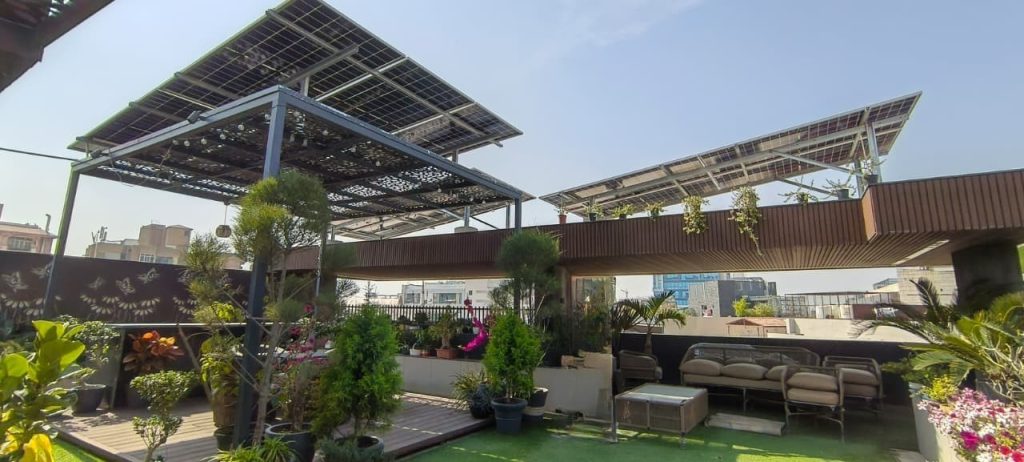
3kW vs 5kW Solar System: Quick Comparison
| Feature | 3kW Solar System | 5kW Solar System |
| Daily Generation | 12–15 Units | 20–25 Units |
| Monthly Generation | 360–450 Units | 600–750 Units |
| Roof Space Required | 250–300 sq. ft. | 400–500 sq. ft. |
| Suitable For | 2–3 BHK Homes | Large 3–4 BHK Homes |
| AC Usage | 1–2 ACs | 2–4 ACs |
The better question, however, is not how much electricity the system produces.It's how much electricity your home consumes.
Which System Matches Your Electricity Bill?
For most Gurgaon households, monthly electricity bills provide the clearest indication of the right system size.
A 3kW Solar System May Be Right If:
- Your electricity bill is between ₹3,000–₹5,000 per month
- You live in a 2–3 BHK apartment or builder floor
- Your home typically uses one or two ACs
- You have limited rooftop space
A properly designed 3kW system can offset a significant portion of household electricity consumption while requiring a lower upfront investment.
A 5kW Solar System May Be Better If:
- Your monthly bill regularly exceeds ₹6,000
- You use multiple air conditioners
- You live in an independent house or villa
- You are planning to buy an electric vehicle in the future
Many homeowners choose a 5kW system because it allows them to accommodate future energy requirements without upgrading later.
What Subsidy Is Available in Gurgaon?
Amit was relieved to learn that both 3kW and 5kW systems qualify for the same subsidy cap. One of the biggest reasons rooftop solar has become more affordable is the PM Surya Ghar Muft Bijli Yojana.Under the current subsidy structure, eligible residential consumers can receive:
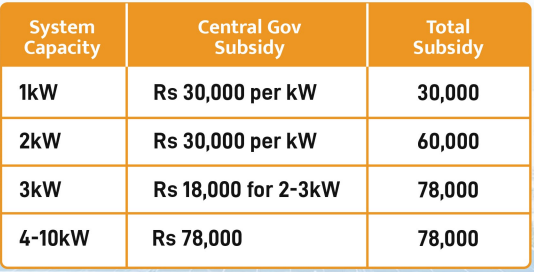
This means both 3kW and 5kW systems can benefit from the same maximum subsidy amount, subject to applicable government guidelines.For many homeowners, this significantly reduces the effective project cost and improves overall savings.
Understanding Net Metering in Gurgaon
Amit’s installer explained DHBVN’s net metering in simple terms: the extra units his panels produced in the afternoon would be credited against his night‑time usage. Under DHBVN’s policy, a bidirectional meter records both imported and exported electricity. This means if Amit’s system exports 15 units during the day and he consumes 15 units at night, those units are balanced on his bill. DHBVN allows homeowners to carry forward surplus credits month to month, ensuring that excess summer generation can offset higher winter consumption. Importantly, the utility issues a “solar adjustment” line item on the bill, so families can clearly see how much of their grid usage was offset by solar.
This transparent mechanism is one of the reasons rooftop solar adoption has accelerated in Gurgaon—even when you’re not home during the day, your system continues generating value and reducing your DHBVN bill. Learn more about DHBVN net metering process here.
How Much Roof Space Do You Need?
A 3kW needs ~250–300 sq. ft., while a 5kW needs ~400–500 sq. ft. A site survey ensures your rooftop can accommodate the system despite tanks or shading.However, factors such as water tanks, staircases, shading from nearby buildings, and rooftop design can affect the final layout.A professional site survey helps determine how much usable space is actually available.Here are 7 things to consider before installing a rooftop solar system.
How Much Can You Save Every Year?
While actual savings depend on electricity tariffs and usage patterns, most homeowners are surprised by how much solar can offset annually.
| System Size | Estimated Annual Generation | Potential Annual Savings* |
| 3kW | 4,500–5,400 Units | ₹30,000–₹45,000 |
| 5kW | 7,200–9,000 Units | ₹50,000–₹75,000 |
*Savings vary based on consumption, tariff slab, and net metering benefits.Over the lifespan of the system, these savings can add up significantly. Find out how much money rooftop solar can save you.
How Long Does Installation Take?
Many homeowners assume solar installation is a lengthy process.In reality, the physical installation is usually completed within a few days.
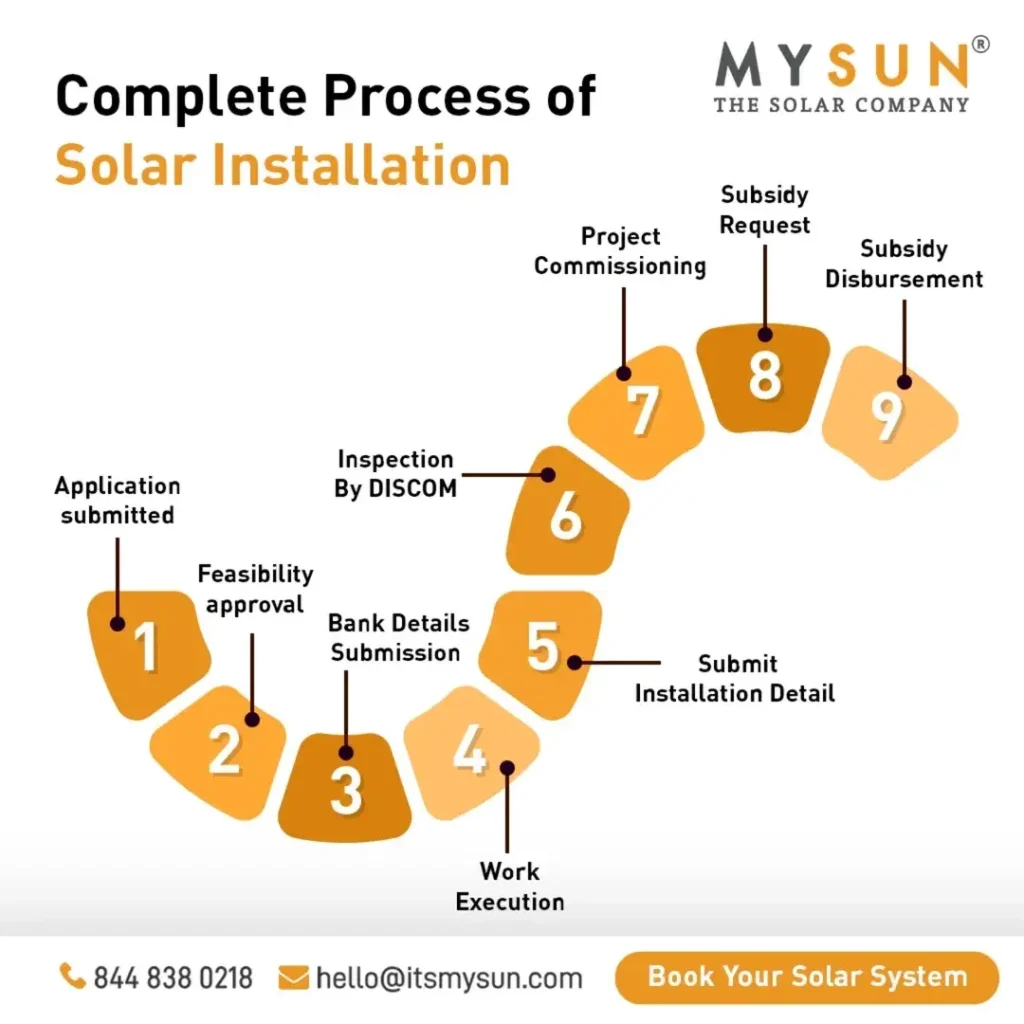
The typical process includes:
- Site Survey
- System Design
- Material Delivery
- Installation
- Testing & Commissioning
- Net Metering Approval
The overall timeline depends on approvals and documentation, but the rooftop installation itself is generally quick and hassle-free. Explore our complete rooftop solar installation guide.
How MYSUN Helps Gurgaon Homeowners
At MYSUN, every solar recommendation begins with understanding your electricity bills, rooftop space, and future requirements.Our team helps homeowners with system sizing, subsidy guidance, DHBVN net metering support, installation, and after-sales service.Whether a 3kW or 5kW solar system is right for you depends on your home—not a standard package.A professional assessment can help ensure that your rooftop solar system delivers the maximum savings possible for years to come.
Why More Homes in Delhi NCR Are Going Solar in 2026
Electricity bills in Delhi NCR aren’t just a small monthly cost anymore. If you live in Noida, Gurgaon, Greater Noida, Delhi, or Faridabad, you’ve probably seen your summer power bills shoot up to ₹10,000–₹20,000. Blame it on the soaring temperatures, running ACs all day, charging EVs, and working from home — it all adds up.
At the same time, electricity prices keep jumping around because of global fuel problems and higher energy costs . Whenever international fuel prices go up, Indian households feel it too — the cost of producing electricity rises, and tariff hikes follow.
That’s why so many people in Delhi NCR are rushing to install rooftop solar in 2026. For homeowners, solar isn’t just about helping the environment now. It’s also a smart way to save money.
Why Rooftop Solar Is Becoming Popular in NCR
Walk through Noida Extension, Golf Course Road in Gurgaon, South Delhi, Dwarka, or Greater Noida West, and you’ll see the change. Solar installations are everywhere now. People are taking control—generating their own electricity instead of being at the mercy of the grid. They’re bringing down those monster bills and locking in some peace of mind about future payments.
A basic 3kW solar setup can shave ₹3,000–₹5,000 off your monthly bill depending on how much power you use. Bigger houses with 5kW systems save even more, especially when summer pushes ACs into overdrive.
Once you set up a solar system, it’ll probably keep working efficiently for 25 years or more. It’s not some gadget that needs constant upgrading. It’s an investment that keeps paying you back.
Nowadays, families do their homework—they compare 3kW solar prices, use tools like the MYSUN Solar Calculator, and figure out exactly how much they’ll save before they buy.
A Real Story from Delhi Extension
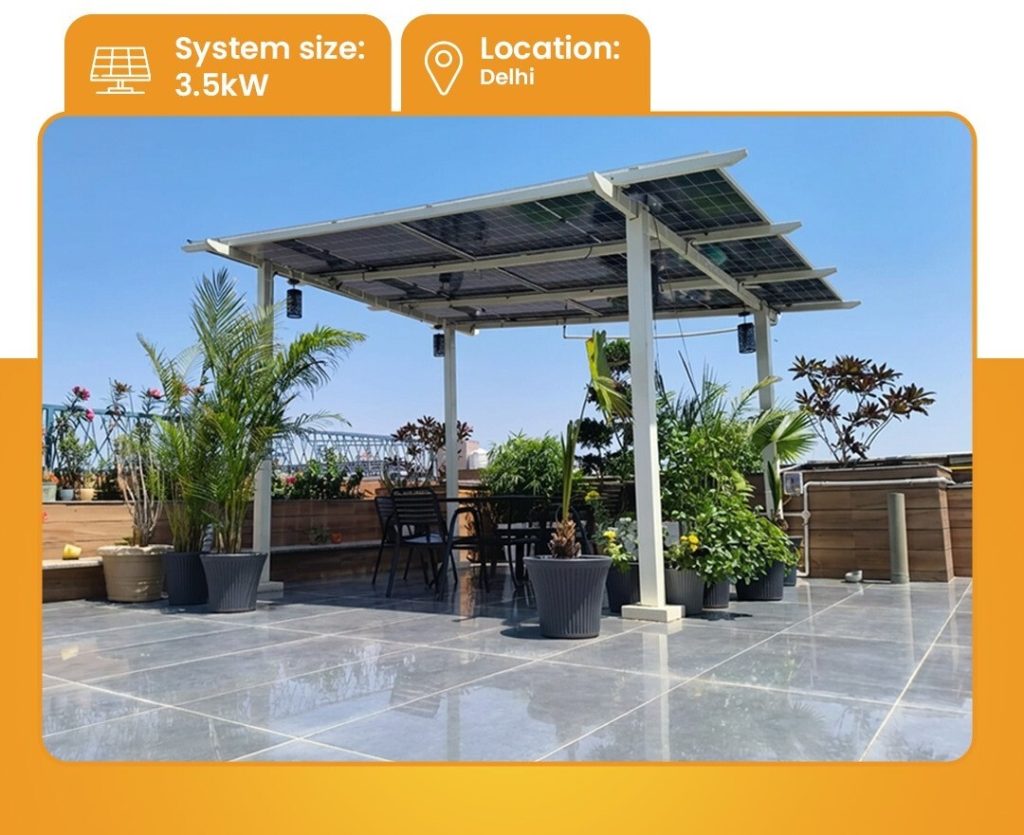
Let’s talk about a typical homeowner: 3BHK apartment in Delhi, two ACs, monthly power usage around 850–900 units. Their summer bills used to hit ₹8,500. After checking the numbers on the MYSUN calculator, they installed a 3.5kW rooftop solar system with net metering. Guess what? Their average bill fell to ₹2,500–₹3,000, depending on the season. That’s ₹60,000–₹70,000 saved each year—not a small sum. And they’re less worried about tariff hikes.
Hybrid Solar Systems Are Growing in Gurgaon
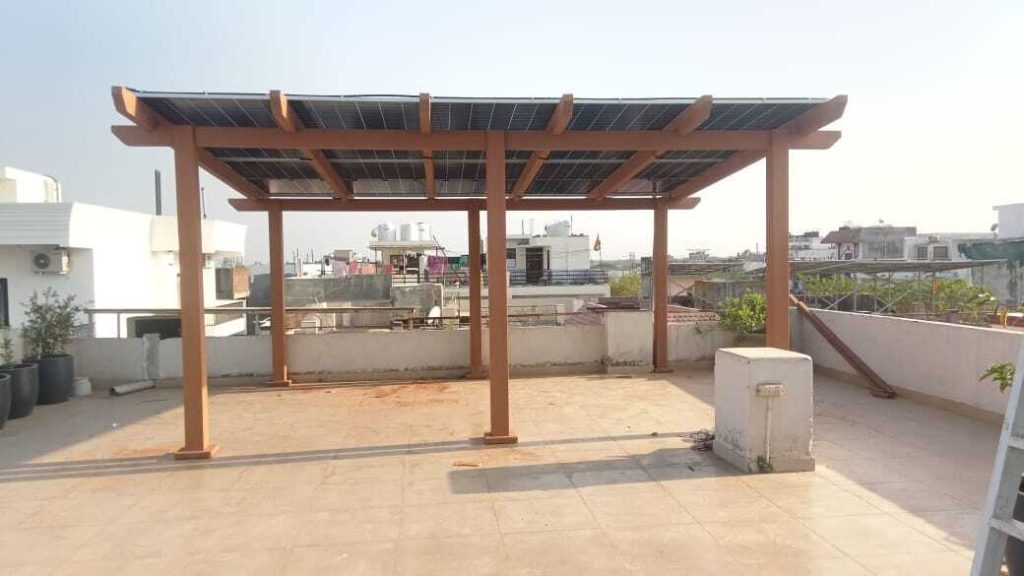
Stories like these aren’t isolated—across NCR, families are crunching numbers and discovering solar makes financial sense. Villa owners in Gurgaon are taking things further with hybrid systems that include batteries. Take one homeowner near Golf Course Extension Road—he added a 5kW hybrid setup. Now, whenever there’s an outage, the system keeps essential appliances running. Plus, the monthly bill is much lighter. This blend of backup and savings is putting hybrid solar on everyone’s radar.
Why More Homeowners Are Using Solar Calculators
Before installing, most families now run the numbers on solar calculators—checking savings, payback, and subsidies. It’s become part of the decision-making ritual and most common research done are:
- Monthly savings
- System size
- Subsidy eligibility
- Payback period
That’s why tools like the MYSUN Solar Calculator are becoming increasingly useful.
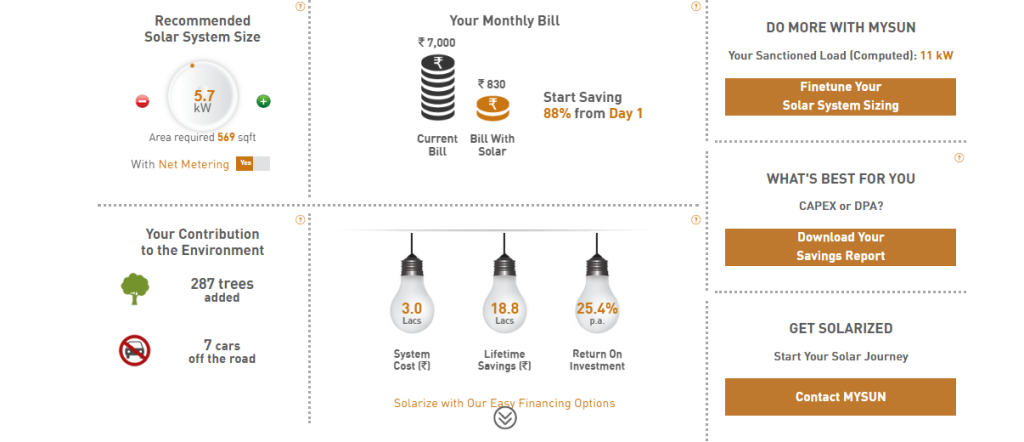
By entering your monthly electricity bill and location, you can estimate:
- Recommended solar system size
- Potential savings
- Approximate subsidy
- Return on investment
This helps families make more informed decisions before installation.
Solar Subsidy in Delhi NCR
For many families, subsidies are the final push—they make solar not just smart, but affordable. Government schemes like PM Surya Ghar Yojana have made rooftop solar more affordable for middle-class households. Eligible homeowners can receive subsidies depending on system size:
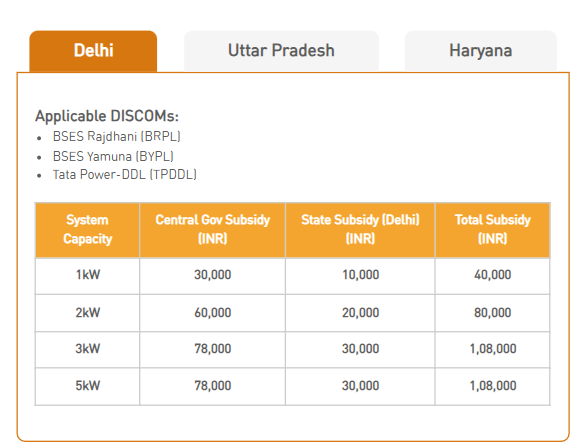
In Delhi NCR, DISCOMs like TPDDL, BSES, BYPL, and NPCL handle approvals and net metering processes. Also once the net metering approval process has been finalized and the system has been commissioned, the government subsidy is typically deposited into the bank account of the homeowner within the timeframe of 35-40 days as is dependent upon DISCOM's processing time.
However, many homeowners still find subsidy paperwork confusing.That’s why companies like MYSUN, widely recognized as one of the best solar companies in NCR, help you with documentation, subsidy approval, and installation so the process feels effortless.
Why make 2026 Different?
You’ve probably heard people talk about solar for years, but 2026? It’s different. now solar isn’t a “nice-to-have upgrade.” Rising bills and global uncertainty have made it feel like a must-have. You might even be asking yourself, “How much money am I losing every year by not switching?”
For you, solar has gone from being a cool idea to a smart long-term investment. It’s about cutting your costs now and making sure you don’t get caught out by unpredictable prices later.
What Families Usually Want to Know
Most homeowners still have a few common questions before they commit. Can solar panels really slash your bill? The answer—yes, often by 70–80%. What’s the best setup for a 3BHK? Usually a 3kW–5kW system works well. Is there a subsidy? Absolutely, thanks to government schemes. And what about blackouts? Hybrid systems keep essentials running. Panels last around 25 years, so the investment is worth it—especially if your bills are sky-high
MYSUN: Your Partner in Delhi Ncr Solar Revolution
MYSUN isn't just installing solar panels; we're building a sustainable future for Delhi Ncr. As the best solar company in NCR, we’re dedicated to providing exceptional service, from the initial consultation to ongoing maintenance. We're here to answer your questions, address your concerns, and guide you through your solar journey.
Explore More:
- Learn more about Subsidy plan in Delhi
- Calculate your saving
Ready to embrace the sun?
Contact our solar advisors today for a complimentary consultation at +918448380218 or email [email protected]. Let's make Delhi Ncr shine brighter, together. Share your thoughts and experiences in the comments below!
Why Now Is the Right Time to Go Solar in Ghaziabad
Speak to any resident of Ghaziabad today, and most of them will voice their complaint regarding the same - electricity bill. Each passing summer season turns out to be costlier than the previous one.
By the month of May, the temperature in Ghaziabad rises to an extent that one finds it hard to tolerate. All this while, air conditioners run continuously along with other electrical appliances.
This is what made solar panels more popular in recent times. What at first seemed like a costly option started to look like a practical one.
And this was possible due to companies such as MYSUN helping them do this. They handles everything from rooftop inspection to subsidy processing.
Why So Many Ghaziabad Residents Are Choosing Solar Energy
Due to the hot summers and heavy consumption during daytime hours, many houses are capable of producing sufficient power to bring down their electricity bills. A few years back, solar panels were rare to spot. However, nowadays, driving through Wave City, Kaushambi, and Indirapuram will reveal many such rooftops.
For people who are paying around ₹10,000 to ₹12,000 monthly on electricity bills, the economic advantage gained during this period will be substantial. Additionally, due to the subsidies provided by the government, the burden of payment has also been considerably eased.
That is one of the reasons why most individuals searching for Best Solar Company in Ghaziabad are more worried about quality and service than finding the best option.
Real Stories from Ghaziabad Homeowners
One of our customers, Mr. Rishabh Bhatt from Indirapuram, was facing the same problem many families in Ghaziabad are dealing with right now - extremely high summer electricity bills.
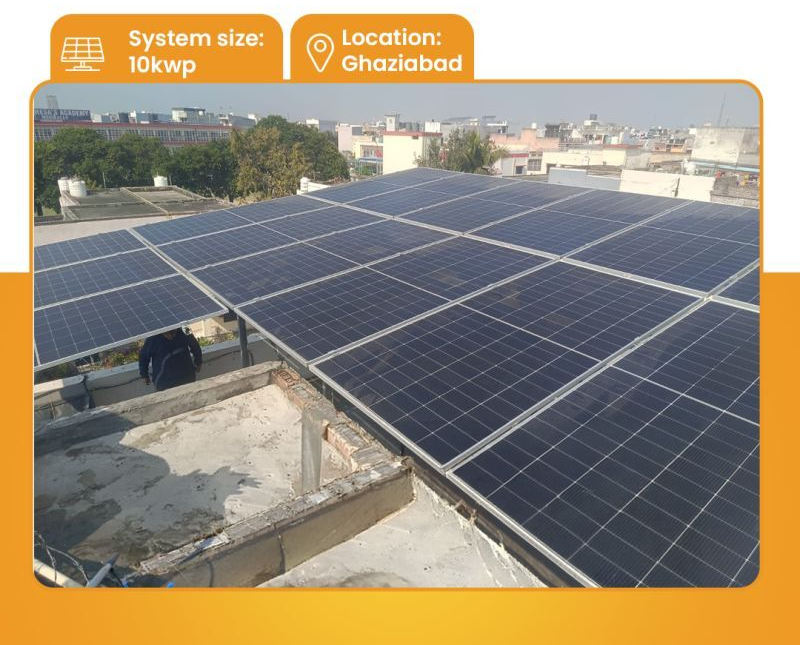
As he was using 9 ACs every day, his monthly bill had gone up to almost ₹18,000-₹20,000 especially during summer.
Last year, he had installed a 10kW rooftop solar power plant with the help of MYSUN. Getting the subsidy scheme under PM Surya Ghar Muft Bijli Yojana helped him reduce the costs of installation.
Installing the 10 kWp solar power plant led to a huge reduction in electricity bills for the family. In some months, the bill was 0, since most of their consumption during daytime would be met through solar energy.
Raj Nagar Extension Homeowner Recovered Investment Faster Than Expected
Another customer, Mrs. Vimla Devi from Raj Nagar Extension, decided to go solar after noticing how quickly electricity costs were increasing every year.
Before installing solar, her monthly electricity bill was around ₹7,500, especially during summers. She later installed a 4kW rooftop solar system through MYSUN and also received government subsidy benefits of nearly ₹1,08,000.
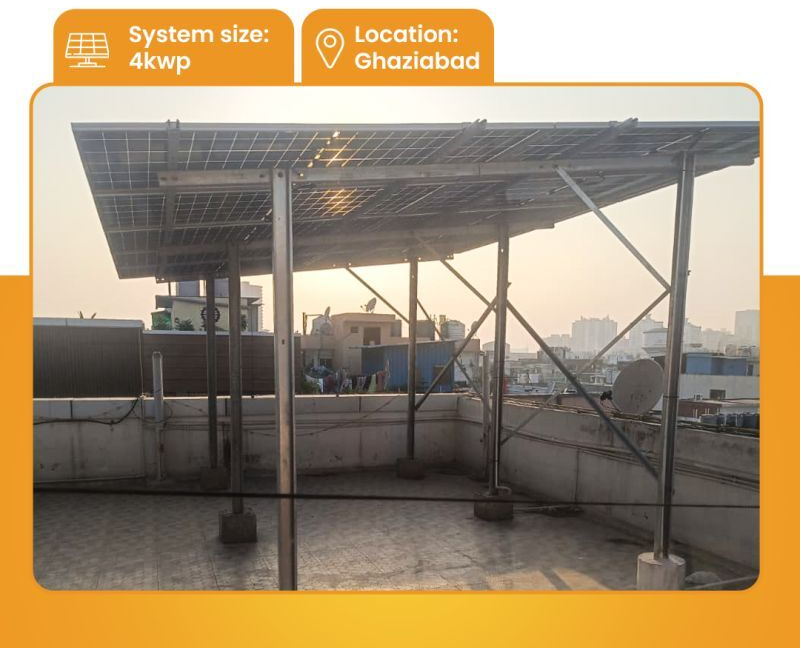
Today, most of the home’s electricity needs are covered through solar, which means the family now barely pays anything for electricity in many months.
And once the system cost is fully recovered, most of the electricity generated afterward feels almost free.
Small Actions Add Up to Big Financial Rewards Later
While most households think they need to wait until the “right” moment to go solar, many of our clients who have rooftop solar panels installed just 2-3 years ago are reaping the benefits right now.
Their solar panels are still producing power daily, even as electricity prices in NCR continue rising year after year. Naturally, they keep saving more money year after year.
It is this logic that is motivating people in Ghaziabad to do more research on solar calculators before they make a move. They are not simply asking questions like, “How much will it cost me?” anymore.
They want to know, “How much can I save over the next 20-25 years?”
Solar Installation in Ghaziabad: How Much Does It Really Cost?
Many individuals continue to believe that rooftop solar is suitable only for expensive houses.
But that is not quite correct nowadays due to various reasons. For example, subsidies and EMI payments have made it possible to install solar panels in less expensive houses too.
Here is a simple cost estimation of residential solar systems used in Ghaziabad:
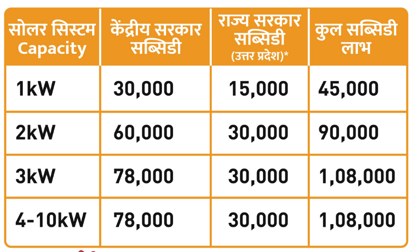
In the current scenario, most households are now opting for solar power systems according to their average monthly electricity consumption and budgets.
Some people choose a small system initially, whereas other people choose large systems that will help lower their electricity bills right from the start.
How to Apply for PM Surya Ghar Muft Bijli Yojana
This is the reason why people have been taking up solar energy lately due to the government subsidies provided under PM Surya Ghar Muft Bijli Yojana scheme.
However, the process is not very complicated. It begins with an inspection of the rooftop along with analyzing the electrical consumption of the household. The appropriate solar panel size is determined based on the results.
MYSUN then manages all further formalities such as documentation, application of subsidy, installation, and net-metering approvals.
After completing all processes, the subsidy is transferred into the customer's bank account.
The basic requirements for applying include:
- Property
- Rooftop Space
- Electricity Connection
- Rooftop Solar Installation
What Is Net Metering — And Why Do Homeowners Love It?
Ghaziabad homeowners usually find net metering very pleasing once they know how it really works.
Solar panels produce more energy than is used during daylight. Rather than allowing excess energy to be wasted, this energy is fed into the electricity grid.
The units are then modified either during night-time or during cloudy periods with the use of the credit gained before.
In simple terms, you begin to feed electricity back into the system during the day and reap its advantages when needed.
Importance of AMC and Maintenance Services
There can be harsh weather conditions in Ghaziabad and NCR that might have an effect on rooftop solar power plants over time due to dust, summers, and varying weather conditions if the plant is not maintained regularly.
This makes AMC as important as the installation process itself.
Some key features of MYSUN's AMC include:
- Provision of regular maintenance services
- Help in cleaning panels
- Performance monitoring
- Warranty services
- AMC schemes for optimal efficiency
As having solar energy installed is just the start, but maintaining its efficient operation throughout the coming 20-25 years is what will help customers realize the true benefits of their investments.
More Reasons to Trust MYSUN
The moment that homeowners decide to look for The Best Solar Company in Ghaziabad, the following are some of the things that come to their mind:
- Reliability
- Clear savings calculations
- Quality installation services
But most importantly, people will prefer companies which are willing to help even when the solar installation project is done.
It’s where MYSUN stands out with its credibility
In addition to helping households get maximum benefits from government subsidies, MYSUN designs solar solutions tailored to the energy requirements of each household while taking care of the entire process, especially since some homeowners might be using solar for the first time.
If you were also considering solar panels, now might be the perfect opportunity to explore solar energy. Connect the MYSUN experts mobile (+91 84483 80218) or email ([email protected]).
क्या गांव में भी लग सकते हैं सोलर पैनल? जानें आसान प्रक्रिया और फायदे
क्या गांव में भी लग सकते हैं सोलर पैनल?
जानिए सरकारी योजनाएं, आसान प्रक्रिया और असली फायदे
- क्या आप गांव में रहते हैं और बिजली के बिलों से परेशान हैं?
- क्या आपके इलाके में बिजली अक्सर कट जाती है या महंगी है?
अगर हां, तो आपके लिए सोलर पैनल एक स्मार्ट और टिकाऊ समाधान हो सकता है।
गांवों में सोलर पैनल लगवाना अब आसान और किफायती है
भारत सरकार की प्रधानमंत्री सूर्यघर मुफ्त बिजली योजना (PM Suryaghar Muft Bijli Yojana) और राज्यों की सब्सिडी योजनाओं ने गांवों तक भी सौर ऊर्जा की पहुंच बना दी है। अब गांवों में भी घर, खेत और स्कूल सोलर से रोशन हो रहे हैं।
गांव में सोलर पैनल क्यों लगवाएं?
सबसे आम समस्याएं जिनका समाधान सोलर ऊर्जा से हो सकता है:
- बार-बार बिजली कटना
- महंगे बिजली बिल
- खेतों में सिंचाई के लिए डीजल पंप पर निर्भरता
- बिजली कनेक्शन की अनुपलब्धता
सोलर पैनल से मिलने वाले प्रमुख फायदे:
- 300 यूनिट तक मुफ्त बिजली हर महीने
- एक बार लागत, सालों की बचत
- खेती के लिए सोलर पंप का उपयोग – सिंचाई अब सस्ती और भरोसेमंद
- ग्रिड से जुड़कर अतिरिक्त बिजली बेचने का मौका
योजनाएं जो गांवों को बना रही हैं सौर ऊर्जा में आत्मनिर्भर
🔹 PM सूर्यघर मुफ्त बिजली योजना (शुरुआत: फरवरी 2024)
- लक्ष्य: मार्च 2027 तक 1 करोड़ घरों को 300 यूनिट मुफ्त बिजली देना
- अब तक: 1.45 करोड़+ पंजीकरण, 26 लाख+ आवेदन (दिसंबर 2024 तक)
- फायदा: अधिकतम ₹78,000 तक की केन्द्रीय सब्सिडी, सीधा लाभार्थी के खाते में
🔹 मॉडल सौर ग्राम योजना:
- हर जिले में एक "मॉडल सोलर गांव" विकसित किया जा रहा है
- विशेष वित्तीय सहायता और इंफ्रास्ट्रक्चर सपोर्ट
- उद्देश्य: ग्रामीण भारत को ऊर्जा आत्मनिर्भर बनाना
राज्यवार लाभ – जानें आपके गांव को कितना फायदा मिल सकता है
दिल्ली
- PM योजना की सब्सिडी के अलावा दिल्ली सरकार से अतिरिक्त सब्सिडी
- शहरों और गांवों दोनों के लिए उपलब्ध
- तकनीकी सहायता और इंस्टॉलेशन में मदद
उत्तर प्रदेश
- राज्य सरकार द्वारा 1–3 kW सिस्टम पर अतिरिक्त सब्सिडी
- 2027 तक 8 लाख रूफटॉप सिस्टम स्थापित करने का लक्ष्य
- ग्रामीण और शहरी दोनों क्षेत्रों के लिए सब्सिडी सुविधा
हरियाणा
- PM योजना के तहत ₹78,000 तक की सब्सिडी
- राज्य सरकार का फोकस ग्रामीण परिवारों को आत्मनिर्भर बनाना
- किसानों के लिए सोलर सिंचाई पंप योजनाएं भी उपलब्ध
अक्सर पूछे जाने वाले सवाल (FAQs)
Q1. क्या मेरे गांव में सोलर पैनल लग सकता है?
हाँ, अगर आपके घर की छत पर धूप आती है, तो MYSUN जैसी कंपनियां आपके गांव में भी इंस्टॉलेशन करवा सकती हैं।
Q2. सब्सिडी कैसे मिलेगी?
सरकारी पोर्टल https://pmsuryaghar.gov.in/ पर आवेदन के बाद सब्सिडी सीधे आपके बैंक खाते में ट्रांसफर होती है।
Q3. इंस्टॉलेशन और मेंटेनेंस कौन करेगा?
MYSUN जैसी अनुभवी कंपनियां साइट सर्वे से लेकर इंस्टॉलेशन और सब्सिडी गाइडेंस तक सभी काम करती हैं।
सोलर पैनल लगवाने की आसान प्रक्रिया
- MYSUN से संपर्क करें – एक्सपर्ट सलाह के लिए
- साइट सर्वे – आपके घर या खेत का निरीक्षण
- सरकारी पोर्टल पर आवेदन – सब्सिडी के लिए
- इंस्टॉलेशन – MYSUN टीम द्वारा
- बिजली उत्पादन शुरू – बचत चालू!
आज ही शुरुआत करें – MYSUN के साथ
अगर आप चाहते हैं कि आपके गांव का हर घर और खेत रोशन हो, तो ये सही समय है। सोलर अपनाइए, बचत बढ़ाइए और देश को स्वच्छ ऊर्जा की दिशा में आगे बढ़ाइए।
📞 कॉल करें: +91 84483 80218
🌐 वेबसाइट पर जाएं: www.itsmysun.com
💬 मुफ्त सलाह, साइट सर्वे और सब्सिडी सहायता के लिए अभी संपर्क करें।
MYSUN – सोलर अपनाइए, बचत बढ़ाइए!
क्या आपका सोलर सिस्टम बिजली कटते ही बंद हो जाता है? जानिए इसका कारण और समाधान
बिजली कटे, फिर भी रोशनी रहे – जानिए कैसे MYSUN सोलर सिस्टम देता है बैकअप का भरोसा
गर्मी के मौसम में बिजली का जाना आम हो गया है – चाहे शहर हो या गांव। ऐसे में लोग जब सोलर लगाने की सोचते हैं, तो सबसे पहला सवाल होता है:
"क्या बिजली जाने पर भी मेरा सोलर सिस्टम पंखा और लाइट चला पाएगा?"
इस सवाल का जवाब "हां" या "ना" नहीं है – यह इस पर निर्भर करता है कि आपके पास कौन-सा सोलर सिस्टम है। चलिए, इसे सरल भाषा में समझते हैं।
भारत में बिजली क्यों जाती है – और सोलर यूज़र्स को इसकी चिंता क्यों करनी चाहिए?
आज भी भारत के कई हिस्सों में बिजली कटौती एक बड़ी समस्या है। इसके पीछे कई कारण हो सकते हैं:
- गर्मियों में अधिक बिजली की मांग के कारण ओवरलोडिंग
- आंधी-तूफान और बारिश से लाइन का टूटना या फॉल्ट
- ग्रिड में मरम्मत या अपग्रेड के कारण प्लान्ड कट्स
इसलिए यह जानना ज़रूरी है कि जब ग्रिड फेल हो, तो क्या आपका सोलर सिस्टम चल सकता है?
कौन-सा सोलर सिस्टम बिजली कटते वक्त काम करता है?
1. ग्रिड-टाइड सोलर सिस्टम – सबसे पॉपुलर लेकिन सीमित
यह सिस्टम आमतौर पर बिना बैटरी के आता है और सीधे ग्रिड से जुड़ा होता है।
जब बिजली जाती है, तो यह सिस्टम खुद ही बंद हो जाता है।
इसका कारण: सुरक्षा। यह "एंटी-आइलैंडिंग" तकनीक के कारण ग्रिड से डिसकनेक्ट हो जाता है ताकि मेंटेनेंस के समय कोई खतरा न हो।
नतीजा: डिसकनेक्ट होते ही लाइट चली जाती है
2.ऑफ-ग्रिड सोलर सिस्टम – पूरी आज़ादी के साथ
यह सिस्टम बैटरी के साथ आता है और ग्रिड से बिल्कुल कटा हुआ होता है।
सूरज की रोशनी से बनने वाली बिजली पहले बैटरी में स्टोर होती है और ज़रूरत के वक्त वहीं से घर को सप्लाई दी जाती है।
नतीजा: बिजली कटे या न कटे – आपके घर की लाइट, पंखा, WiFi सब चलते रहेंगे।
3.हाइब्रिड सोलर सिस्टम – बचत और बैकअप का सही मेल
इस सिस्टम में ग्रिड से जुड़ाव भी होता है और बैटरी भी शामिल होती है।
जैसे ही बिजली जाती है, स्मार्ट इन्वर्टर अपने आप बैटरी मोड पर चला जाता है और लाइटें जलती रहती हैं।
नतीजा: आपको ना जनरेटर की ज़रूरत, ना इन्वर्टर की – घर में बिना रुकावट बिजली मिलती रहती है।
क्यों ज़रूरी है सोलर सिस्टम के साथ बैटरी बैकअप?
ज़्यादातर लोग बिना बैटरी वाला सोलर सिस्टम लगाते हैं, लेकिन इससे सिर्फ दिन में धूप के समय फायदा होता है।
अगर आप रात में या बिजली कटौती के समय भी पावर चाहते हैं, तो बैटरी ज़रूरी है।
बैटरी बैकअप से मिलने वाले फायदे:
- बिजली कटे तो भी कोई फर्क नहीं पड़ता
- बचत – रात या पीक टाइम में बैटरी की बिजली इस्तेमाल
- जरूरी डिवाइस जैसे लाइट, फैन, वाई-फाई, फ्रिज चलते रहते हैं
MYSUN के सभी सिस्टम बैटरी-रेडी होते हैं – आप चाहें तो बाद में भी बैटरी जोड़ सकते हैं।
बैटरी जोड़ने की लागत क्या होती है?
बैटरी जोड़ना एक इन्वेस्टमेंट है, जो समय के साथ अपनी कीमत वसूलता है। इसके खर्च को कई चीज़ें तय करती हैं:
- कितना बैकअप चाहिए – पूरा घर या सिर्फ कुछ डिवाइसेज़?
- नया सिस्टम है या पुराने में बैटरी जोड़नी है?
- बैटरी का प्रकार – लिथियम-आयन या लेड-एसिड
MYSUN आपको एक पर्सनलाइज्ड सोलर एनालिसिस देता है जिससे आप जान सकें:
- कितनी शुरुआती लागत आएगी
- कितनी बचत होगी
- कौन-कौन से EMI या Solar PPA विकल्प हैं
क्या बैटरी के बिना अभी सोलर लगाना सही है?
बिल्कुल!
बहुत से ग्राहक पहले ग्रिड-टाइड सिस्टम से शुरू करते हैं और जब ज़रूरत लगे तब बैटरी जोड़ लेते हैं।
MYSUN के सिस्टम इसीलिए 'फ्यूचर-रेडी' होते हैं।
अब समय है पावर कट्स से आज़ादी पाने का
क्या आप भी चाहते हैं कि बिजली जाए, फिर भी आपका घर में बिजली बनी रहे?
अब वक्त है पहला कदम उठाने का।
MYSUN के साथ पाएं:
- 🔍 मुफ्त सोलर कंसल्टेशन
- ⚙️ सही सिस्टम का सुझाव
- 💳 बैटरी फाइनेंसिंग विकल्प
📞 कॉल करें: +91-84483 80218
🌐 वेबसाइट: www.itsmysun.com
🌞 समझदारी से चुनें। MYSUN चुनें।
Can Solar Panels Work in a Power Outage? MYSUN Explains the Truth
Power cuts in India are still common—even in cities. If you're considering going solar or already have a system installed, a key question many homeowners ask is: "Will my solar panels work during a power outage?"
Who Should Read This?
This guide is for:
- Homeowners exploring solar for the first time.
- Current solar users are wondering why their system shuts down during blackouts / Power Outage.
- Anyone looking to protect their home from unexpected power outages.
Why Do Power Outages Happen—and Why Does It Matter for Solar Users?
India’s electricity grid, while improving rapidly, is still prone to outages caused by:
- Summer overloads (especially in Tier 2/3 cities and rural areas)
- Storms and weather-related faults
- Maintenance or infrastructure issues
When the power goes out, the behavior of your solar system depends on which type you’ve installed
Types of Solar Systems and How They Respond to Outages
1. Grid-Tied Solar Systems (Most Common in India)
"Why doesn’t my solar system work during a power cut?"
Short answer: It's designed that way for safety.
How it works:
- Your panels generate power and send excess energy to the grid (net metering).
- During outages, the system automatically shuts down (a feature called anti-islanding) to protect utility workers fixing the lines.
Result during outage: Your home won’t get power, even if it’s sunny.
2. Off-Grid Solar Systems (For Full Independence)
"How can I keep my home powered without relying on the grid?"
How it works:
- These systems are completely disconnected from the grid.
- Batteries store excess solar energy, which powers your home 24/7.
Result during outage: Uninterrupted power, regardless of grid failures.
Best for: Remote areas, farms, or homes with frequent outages.
3. Hybrid Solar Systems (Backup + Savings)
"Is there a system that gives me savings and backup?"
How it works:
- Connected to the grid (for net metering).
- Includes batteries that store power for emergencies.
- Smart inverters switch to battery mode during blackouts.
Result during outage: Lights stay on. Appliances keep running.
Best for: Urban households wanting the best of both worlds—savings + security.
Why Battery Backup Matters (And How MYSUN Helps)
Most grid-tied systems in India don’t come with battery backup by default—but MYSUN’s systems are battery-ready, meaning you can add storage anytime.
Benefits of Solar Battery Backup:
- Power Security: Stay powered during grid failures.
- Cost Optimization: Use stored energy at night or during peak rates.
- Peace of Mind: Critical loads like lights, Wi-Fi, fans, and fridges keep running.
"With battery storage, you're not just saving on bills—you’re buying energy freedom."
What’s the Cost of Adding Battery Backup?
Adding battery storage is an investment—but one that pays off over time. Here's what impacts the cost:
- Backup Size Needed: Full home or just essential loads?
- Solar System Type: Hybrid or new?
- Battery Brand & Capacity: Lead-acid, lithium-ion, etc.
MYSUN provides a free, personalized solar evaluation to help you understand:
- Upfront vs. long-term costs
- Payback period
- Available financing options or solar PPAs (Power Purchase Agreements)
Should You Wait to Add Batteries Before Going Solar?
No! Many homeowners start with a standard grid-tied system and add batteries later as needs evolve.
Real Results from MYSUN Customers:
- 20–100% savings on electricity bills
- Monthly returns from net metering credits
- Zero upfront costs with MYSUN’s RateGuardian Solar PPA
"The best time to go solar was yesterday. The next best time is now."
Take the First Step Toward Energy Independence
Want to power your home even during outages?
Let MYSUN show you how. We design systems that grow with your needs—from savings today to full backup tomorrow.
🔹 Get a free solar evaluation
🔹 Find the right system for your home
🔹 Learn how battery storage can fit into your budget👉 Visit www.itsmysun.com or call us +91-84483 80218 today.
Choose smarter. Choose MYSUN.



 Book your Solar System for just 6,999 and build your personalized payment plan with Flexi-payTM.


