


Author: Arpit
Interim Union Budget 2024/25 Brings Exciting Update For the Rooftop Solar Market in India
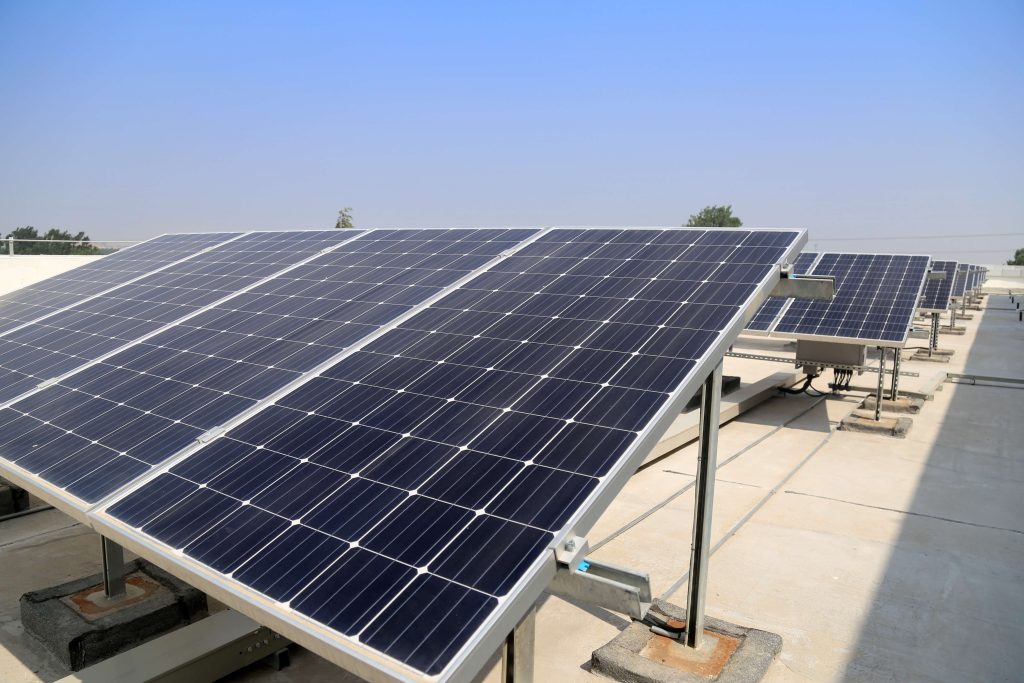
The interim Union Budget 2024/25 heralds a significant leap for India's rooftop solar market with the announcement of the Pradhanmantri Suryodaya Yojana. Envisioned by Finance Minister Nirmala Sitharaman, this scheme is poised to electrify the nation's renewable energy landscape by offering up to 300 units of free electricity monthly to beneficiaries. This ambitious initiative targets 10 million households, enabling them to not only harness but also sell surplus solar energy, fostering a self-sustaining energy ecosystem.
The scheme's unveiling comes at a critical juncture, as India strives to ramp up its rooftop solar installations. Despite setting a lofty target of 40 GW by the end of 2022, the progress has been sluggish, with less than 15% of the goal achieved by mid-2021. However, the Pradhanmantri Suryodaya Yojana aims to inject new momentum into this sector, promising to bridge the gap towards achieving India's renewable energy ambitions. This on the back of various state lead subsidy updates promises well for the sector.
The state-run REC has been entrusted with this initiative, with a robust financial mechanism in place to support the widespread installation of rooftop solar panels. This move is expected to catalyze a domino effect, benefiting not just the direct recipients but also stimulating growth across the solar value chain - from panel manufacturers to installers, contributing to job creation and technological innovation.
Moreover, the government's proactive approach in revising the Central Financial Assistance for residential solar rooftop projects further sweetens the deal for homeowners, making the adoption of solar power more appealing than ever. With additional financial incentives now accessible through the national solar rooftop portal, the path to solar adoption is clearer and more enticing for Indian households.
MYSUN's Take:
"The interim Union Budget 2024 marks an important milestone in democratization of solar energy in India with the Pradhanmantri Suryodaya Yojana, which promises 300 units of free power monthly to households. Aiming to reach 10 million homes, this initiative not only promotes sustainable energy but also paves the way for a substantial 50GW boost in rooftop solar (lets say average system size of 5kW/home), akin to the landmark 100GW solar mission. It's a comprehensive move that promises to invigorate the solar ecosystem, from manufacturing to job creation, underscoring its critical importance in India's energy strategy."
What Did The Union Budget 2022 Have For the Solar Sector?
Over the last few years, at MYSUN, we have shared our views and takeaways from the Union Budget and its impact on the solar industry at large. In case you missed it, here is the blog post outlining the impact of the Union Budget of 2021 on the industry. As is the tradition on the 1st of February, the Finance Minister took the floor and announced the Budget for the Financial Year 2022/23.
The budget at large spoke of the energy transition and the need for attention towards climate change and a greener economy. The Finance Minister announced an allotment of INR 19,500 crore for production-linked incentive for manufacturing of solar modules domestically. The Finance Minister announced, "For facilitating domestic manufacturing for the ambitious goal of 280 GW (GigaWatt) of installed solar capacity by 2030, an additional allocation of Rs 19,500 crore for PLI scheme for manufacturing of high efficiency (solar) modules with a priority of fully integrate manufacturing units for polysilicon to solar PV modules will be made."
On the other hand, the budget estimated to the MNRE for 2022-23 for investment in SECI has been halved to less than INR 1,000 Cr from INR 1,800 Cr from the previous financial year. The Government will also be providing financial support for setting up of Distributed Renewable Energy projects across the border villages, aiding their electrification. The budget also saw the introduction of sovereign green bonds for funding public sector infrastructure projects.
In addition to the direct impact, there is also a substantial increase in spends on building roads, in tune of about 56%, which will definitely aid connectivity and infrastructure, allowing for faster movement of cargo across the country.
Like most budgets, it will be interesting to see the detailed implementation plan and policies that will be key towards the success of the budget. On paper, we look to be well geared towards a green economy overall.
Maharashtra to go green in next 5 years with solar energy
The recent announcement by the energy minister of Maharashtra, Nitin Raut, focuses more on renewable sources of energy. The state is set to “go green” by generating 17,385MW from solar projects in the next five years.
Earlier, It was estimated that Maharashtra can generate 25,000 MW from solar projects but with this announcement coming from the energy minister, the energy department has developed a new ambitious renewable energy policy (REP) to generate 17,385MW from solar projects in the next five years.
The renewable energy policy will attract Rs 75,000 crore investment in the energy sector and other related businesses.
Also, Maharashtra electricity regulatory commission has set an ambitious target for the state to meet 25% of its demands from renewable sources over the next five years.
Based on these recent developments in Maharashtra, now is the right time to go solar and contribute our part towards a sustainable environment. Solar systems can be a great addition to offices or industrial plants as it helps in cutting down electricity bills by 80% which leads to higher savings.
MYSUN has made it easy for people to switch to solar by their different financing options. Now you can easily calculate your solar savings on your fingertips by using their solar calculator that gives you an estimate of the entire cost of a solar system. You can easily get to know the amount of savings you will achieve going solar
With MYSUN solar financing you can choose a payment plan that suits you, Here is a brief about MYSUN solar financing plans:
CAPEX - Pay the Capital Cost of Solar System Upfront
The term CAPEX means Capital Expenditure. In this financing method, you will pay the entire cost of the solar system upfront. This is the best deal for your business as by this method as this is interest-free. It turns out to be the most profitable financing solution. The Levelized cost of electricity and the cost of the solar system is the lowest in this model giving you the best ROI.
MYSUN DPA - Defer the Cost of Solar in Easy Instalments
In this financing method, you can own the entire solar system by paying a 25 to 30 % down payment and paying the rest over 3 to 5 years based on the financing plan you choose. This enables you to enjoy the benefits of solar with reduced electricity expenditure and accelerated depreciation. In the DPA model, MYSUN has designed the plan in such a way that the amount saved monthly on the electricity bill is greater than the installments.
PPA (Power Purchase Agreement) - Pay Nothing for the Solar System
In this model, you don’t have to pay any upfront cost for the solar system. You will have to sign an agreement called Power Purchase Agreement(PPA) with your solar installer or the third party company to buy the electricity generated from the solar system. The agreement fixes a tariff for the next 15 to 25 years.
Don't wait and Start your solar journey today with MYSUN
With such a wide variety of solar financing and buying options available with MYSUN, there is no reason left for your business not to optimize its power expenses. By going solar you will reduce millions on your electricity bills and this will allow you to reinvest the amount for your business growth. Solarize your business today.
Go solar. Speak to MYSUN Solar Advisors on +91 8448380218 or write to them at [email protected].
The Haryana Electricity Regulatory Commission Updates its Net-Metering Policy to Push Rooftop Solar
We have written at length about how industries in Haryana are saving lakhs on electricity bills with rooftop solar, and how solar energy has been becoming more affordable in the state of Haryana. In order to push India closer to the ambitious 100GW installed solar capacity target, the Haryana Electricity Regulatory Commission (HERC) has issued an updated version of its regulations for rooftop solar grid-interactive systems to include net-metering facilities and provisions.
The Haryana solar policy changes by the HERC comes as a reaction to the petition filed by HAREDA (Haryana Renewable Energy Development Agency) on the HERC 2014 Net Metering Regulations; seeking amendments in the policy in order for the state to meet its targets as per the ambitious solar targets set by the Government.
The Key Points from the HAREDA Petition included:
- Consumers should be allowed to sell excess generated power back to the utilities, with net-metering provisions
- Distribution transformers should be allowed up to 100% of its particular distribution transformer capacity for rooftop solar systems
- Consumers should be allowed to set-up solar projects higher than the sanctioned load if they have space and capacity to do so
- Open access consumers looking to set-up rooftop solar projects in their premises should be allowed to use net-metering facilities
- Banking facilities for grid-connected rooftop solar power systems
- Ability to carry forward excess energy generated through the solar system; from one billing cycle to the next, and even to the next financial year
- Exemption of wheeling and cross-subsidy charges for consumers under net-metering
The New Updates Included in Solar Net metering Policy in Haryana
In response, the HERC has issued an updated draft of regulations addressing the points raised by this petition. The following are the key changes/additions made to the policy in the state of Haryana:
- Consumers across all categories including residential, commercial and industrial are now allowed to set-up solar projects with a maximum capacity of 2 MW. However, this comes with the condition - solar projects within the range of 1 to 2 MW must have 25% battery storage that should be able to store and deliver energy for 2 hours.
- The distribution capacity of transformers have been increased to 50% and 30% for LT and HT consumers respectively, up from the earlier 30% and 15% transformer capacity that had been given to LT and HT consumers
- The DISCOMs will continue to provide net-metering arrangements to eligible consumers on a non-discriminatory and a first come first serve basis, as long as the total capacity of rooftop solar systems does not exceed 500 MW, up from the figure of 200 MW
- Rooftop solar systems commissioned under these regulations, whether self-owned or third-party-owned, will be exempted from all wheeling, cross-subsidy, transmission, cross-subsidy, transmission, and distribution, and banking charges and surcharges
Apart from the above conditions, the policy will not grant Open Access consumers the facility of net-metering. Furthermore, the excess energy generated by consumers can be carried forward from one billing cycle to the next, however, the policy does not allow for the excess energy to be carried over to the next financial year.
MYSUN’s take:
The updated solar net-metering policy changes by the HERC have mostly addressed the points brought up in the 2014 HAREDA petition, with the exception of net-metering for Open Access consumers. This is a step in the right direction for the state of Haryana, as this should help encourage the adoption of rooftop solar energy and help increase solar installations in the state. It goes without saying, that the stakeholders will have to be brought to paces with these new changes and the implementation will have to be done quickly to make the most of the policy changes. With that being said, there will need to be similar positive changes to solar net-metering policies across the country, in order to streamline and speed up the adoption of solar energy and meet the Government’s 2022 targets.
Interesting Ways the World is Using Solar: Cars with Rooftop Solar Panels
Interesting ways the world is using solar energy is a series we run on MYSUN, where we bring to our readers some of the most interesting use cases of solar energy. From boats to airplanes to robots, we have seen some very interesting applications of solar energy. However, one vertical that seems to be adapting clean electrical energy faster than most is the automobile sector. Taking the sector to a new height, Hyundai, the South Korean giants in the automobile space has announced a car with a solar system integrated rooftop.

Image source: Techstartups
The New Sonata Solar Hybrid car launched in South Korea will be the first car to bring the first generation technology to the market. The car will feature a structure of silicon solar panels mounted on the rooftop which potentially could charge the battery of the car in the range of 30-60 per cent depending upon the weather conditions of the day. This is good news for those who leave their cars in the outdoors as about six hours of charging will give more than a thousand kilometres extra every year.
Hyundai is reportedly saying that the technology used in the New Sonata Solar Hybrid is the first generation technology and R&D is ongoing for two other types of rooftop systems namely: the second-generation semi-transparent solar roof system, and the third-generation solar-lid on the vehicle’s body. While the former will cater to cars with IC engines, the latter will be mounted on the sunroof of cars.
The solar system on these Hyundai cars will work similarly to how solar Hybrid Rooftop works, where you have a panel of solar cells that will convert light to electricity and a controller, which will convert this electricity to an appropriate usable voltage and store it in the battery of the car. Other than providing the additional kilometers, this kind of system will obviously prove to be a winner for the green tech and environment, saving a ton of CO2.
You will see the new Sonata with a Rooftop Solar Panel on roads in South Korea soon and eventually in North America. However, for European and Rest of the Asian market, it may be a while before we see this car on the road.
MYSUN’s Take: At MYSUN, we love everything solar and this is definitely a very practical and useful utilization of solar power. The real-life challenges, like the maintenance, efficiency, and durability, etc will only be answered when the vehicle becomes mainstream, but Hyundai may just have given the automobile industry a very interesting concept to work with. Who knows, we may at some stage of time, have a car that is purely powered by a solar panel. Intriguing indeed.
5 Things that you must look for in the Perfect Solar PV Installer
Since you are reading this blog post, we are sure you already are well aware of the benefits of solar and are at a stage of considering going solar. Before you decide to go solar there are three key things that you must absolutely consider:
- Accurately predict the generation potential of your site
- Understand and seek flexible payment/ loan for the solar system
- Short list the ‘right solar PV installer and partner’ for you
With the MYSUN Solar Calculator, you can achieve the accurate generation prediction within seconds. Under MYSUN Flexi-PayTM and MYSUN Deferred Payment, you can always opt for flexible payments for your solar system. You may want to give a call to our customer delight team on +91 9873167009 to know more.
This blog post dives deep into how should one go about selecting their perfect rooftop solar installer - a solar partner. Choosing the right solar installation company is absolutely critical because going solar is a decision that you have to stand by for the next 25 years. Not only should the solar installer be experienced, well connected and well equipped, but also must stand by the warranties/ guarantees and stand with you for the life of the solar system. A well-reputed solar PV installer as your solar partner will ensure you are well informed and make choices that are in the best economic interests for you rather than seek an interest of its own. The longevity and reliability of your solar system rests solely on the shoulders of your solar installer and this is why this choice becomes a difference between you saving a few Lakh Rupees a year and a Lakh and some more.
So whether you are considering installing a solar system at an industry or your home, you should follow the guidelines below to make an informed choice, and handpick the right rooftop solar PV system installer.
Here are the five things that you must look for before choosing a solar installation company:
1. Existing projects done by the solar PV installer in your region
When choosing your solar installer assessing the local presence of the installer should be your priority. A solar installer with a strong local presence will not only be able to install your solar system with no delay, but will also be able to provide you with a rigorous after-sales service. And since going solar is at least a 25-year long investment, a diligent servicing is more than mandatory. Having your installer at an approachable distance will ensure even minor breakages are attended to in time and your solar system uptime is optimum.
Studying the size and number of projects completed by the installer in your region is therefore necessary. When selecting your solar installer, do not be afraid to ask for a visit to one of the installed systems by them in your local region so that you can see and get a sense of the engineering and civil work.
2. Team background and engineering expertise of the solar PV installer
The engineering behind your solar system dictates not just the savings that you stand to make on your power bills after installing a solar system but also the overall life of your solar system. Power generation from a solar system is dependent on numerous factors, such as the geographical location of your site, the solar irradiance at your location, the shadowing objects on your rooftop and the power requirements of your building. Hence, an optimally performing solar system is a product of precise engineering; taking into account all the aforementioned influencing factors. Unlike a lot of engineering subjects, a good engineering is a product of not just good knowledge but also on-field experience. A lot of practical situations and issues can be tackled best by an engineering team that has been setting up projects daily.
Therefore, a thorough background check on the solar installing company’s past experience and engineering expertise of the team is advised. It will give you a snapshot of the team’s capabilities, giving you a delivery assurance of a high performing solar system.
3. Relationship of the Solar PV installer with top of the line suppliers and vendors
A famous saying in English, ‘you are known by the company you keep’ is perfectly apt here. A solar installer/partner who deals in the most premium segment with the best vendors and suppliers not only will ensure you get top of the line and latest technology but also will get them to you at the market-beating prices. A good solar installer will have a long-standing relationship with these top of the line vendors which would enable them to also stand by the warranties and guarantees efficiently. The direct benefit of a good working relationship between the supplier and solar partner will be extremely beneficial both at the time of installation as well as in the after-sales where replacements can be managed quickly. Do ask your solar partner for who their suppliers and vendors are to get a clear idea.
4. Flexible financing and necessary guarantees/ warranties offered by the Solar Installer
Going solar will help you save millions in your power bills every year, but there is no denying that solar is a sizeable investment. And solar financing options from the solar installer makes the decision economical and easy. With easy flexible payment options such as the MYSUN FlexiPayTM provided by MYSUN, for residential customers, and the MYSUN Deferred Payment plan for Commercial and Industrial customers you can install a premium solar system and pay for it with the savings you make on your monthly electricity bills over a period of time. Thus, not worrying about the huge upfront cost of the solar system. In a way, your solar system is free of cost as your savings are paying for it. In a matter of 3~5 years, the cost is repaid and you can continue to enjoy the benefits of power generation for the next 20 years and pocket the savings.
A right solar installer will always furnish a transparent and justified guarantee/warranty on your system. You may also want to check with the solar installer for extended warranties. It is a worthy investment and keeps your solar system absolutely safe for large parts of the 25 years.
5. Customer testimonials and reviews of the Solar PV Installer
Customer testimonials and reviews are a true representation of a solar installer’s capabilities. It speaks of the actual performance of the solar system designed and commissioned by the solar installer. It also tells of the relationships that the solar installer is successful in keeping with its customers. Going through the customer testimonials of the installer is, therefore, a smart way to verify the credibility of the solar installer in the market among its customers. In this digital world, just a little bit of diligent research will give you the answers to what the existing customers are talking about their solar installers/partners. For example, to know the customer testimonials of MYSUN customers you can click here, read the reviews on google here, or check our social media pages here: Facebook, Twitter, LinkedIn.
Screening your prospective solar installer with above-mentioned criteria will help you select a perfect solar partner and installer for a rewarding solar journey. At MYSUN, we understand the value of solar investment made by each of our customers. We, therefore, strive to provide the most precisely engineered solar system loaded with technologically advanced components alongside Flexible Payment Plans. Add to it our immaculate after-sale service, a hassle-free 25-year-long solar experience, we make your solar journey memorable. So, if you are convinced and want to go solar, the magical number to dial is +91 9873167009 and our solar advisor will help you not just with your queries but also furnish an absolutely free of cost solar assessment report for your site.
25% Import Safeguard Duty Imposed on Imported Solar Panels from China and Malaysia in India
In a move that was feared and long seen coming, India has decided to levy a 25% safeguard duty on solar panels imported from China and Malaysia. The duty will be levied on all panels imported between 30th July 2018 to 29th July 2019. For further one year, the duty will be reduced to 20% and then 15% between six months intervals.
The import duty prima-face has been placed in order to encourage the local solar panel manufacturers in the country in a push to the Make in India effort. However, with the majority of top solar projects using these imported panels especially from China, this will at least in the short term create choppy waters. Add in the confusion surrounding GST, the solar industry has a fight on its hands.
The notification for the duty was released by the Ministry of Finance on July 30th, 2018 and it would be very interesting to see how will the industry react and whether the pricing will get even more volatile. The safeguard duty order is available both in English and Hindi and can be read in detail here.
Editor update:
Aug 14: The duty has been deferred for now
7 Things to Consider Before Going for a Solar Rooftop System for your Home

With the economics of going solar a lot more feasible and the advancement of technology, today the thought of independent power for your home is a very lucrative thought. At MYSUN we custom design rooftop solar solution for hundreds of houses across the country every day and we come across a new challenge every time. However, the biggest challenge is the feasibility check.
This feasibility check is usually financial as well as geographical. The financial feasibility check is easy. You run the MYSUN Solar Calculator and see if solar makes financial sense for you from a returns point of view. If you are looking to not invest the full amount at one go, you can also utilize the MYSUN Flexi-pay™ option using which you can break your payments in simple interest-free EMIs.
However, beyond financial feasibility, there are a lot of geo lead feasibility checks. These checks are listed below to help you make up your mind if you are considering installing a rooftop solar system.
Are there too many shadow casting objects near your roof?
The best way to check this is to walk up to your rooftop and see the shadows on it. If there are nearby objects such as trees, pillars, poles which cast a lot of shadows, then this is not a very good news. Shadow casting objects tend to reduce the solar output for your solar system. The above image is a 9.4kW Solar System at Nirvana Country Project, Sector 50, Gurgaon. As can be seen, there is no shadow casting object nearby.
However, an accurate shadow analysis is only possible to post a Site Survey for solar and there is quite a possibility that even though there are shadow casting objects they may not come in the way of your solar system. Therefore, always call for an expert for site survey before you decide to invest in a solar system on your rooftop
Do you own the roof rights?
As the name suggests, Solar Rooftop System needs your rooftop to be installed. Therefore, unless you have the requisite rights of the rooftop, you will not be able to enjoy the benefits and savings of the rooftop solar system. For this, an independent house owner is an ideal rooftop solar customer.
However, if you stay in a society or an apartment, you should speak to your RWA or the builder to install rooftop solar on the building so that not just you but the entire building can enjoy the benefits of solar. Several societies in Mumbai have been able to bring down their electricity bills by installing a common solar rooftop system.
Condition of the Rooftop
While you may own rights to your rooftop, the conditioning of the rooftop is required to be at least moderate. Since solar panels are mounted on metallic structures, the rooftop should be able to bear the weight of the entire system. If you are already seeing cracks on your rooftop, you are better advised to repair the rooftop before going for a solar roof.
However, the condition of your rooftop can be accessed very accurately when you opt for a site survey for your system by experts who can then make a better judgment whether the rooftop is conducive for installation or not.
Background of the Installer
While there are several thousand companies that install solar in India, your choice of the installer is going to be absolutely key. After all, a premium quality solar system can last you as far as 25 years. Therefore, the solar system you purchase is most likely to be a gift to your upcoming generations and we are sure, you would never cut corners for it.
When selecting an installer, insist on checking out their previous work, gauge their expertise on the subject and do a thorough background check. At MYSUN, in order to give you this peace of mind for 25 years, we offer MYSUN Assured™, which is an extended warranty and top of the line service package where not just today, we take care of your solar system for years to come maintaining the generation so that the benefits are maximized.
Quality of the Equipment
As aforementioned, premium solar systems last 25 years and therefore your benefits are maximized when you go for a high rated system that has been tested, certified and has a good reputation in the market. It is owing to this that at MYSUN we only use Tier 1 inverters and solar panels which are rated across the world and are of foreign make.
You should not compromise on the quality for saving a couple of thousand Rupees here and there because in the long run, a high-quality solar system will be worth its weight in gold. Ratings of most of the solar equipment are available online and always insist on checking the make before you commit to your solar system.
A big brand supplying equipment globally is more likely to honor the warranty and be quick to replace faulty components as compared to a brand where the production cycle in itself is slow. Avoid being penny wise and pound foolish and go in for the best quality you can find.
Financing Options
While the economics of going solar is far more favorable now than ever before thanks to the falling costs, going solar is still a one time expense. Therefore, you should explore solar financing options too in case you want to go solar and are unable to afford the system right away. At MYSUN, MYSUN Flexi-Pay and MYSUN Deferred Payment Agreement allows our customers to build their own payment plans.
With easy EMI based payback options these plans are extremely popular among our customers as it allows them flexibility without having to compromise on the benefits of going solar. With tie-ups with several financing institutes, MYSUN can also help you out with several external financing options so that you no longer have to wait for your solar system due to financial constraints.
Permissions, Timelines and Solar Policy
It is imperative that you go through the solar policy of your state so that you are well aware of all the rules and regulations when you in your region. This would allow you to discuss realistic timelines with your installer and be able to gauge the scope of work especially in the last mile which more often than not is a cause of the delay. You can go through the solar policies of all the states in India on MYSUN here.
With the above seven points in mind, you will not just be best prepared when you go solar but will also be able to select the right solar partner. At MYSUN we take care of each of the above seven points for you in the most customized fashion. Right from a high-tech site survey to an engineering solution to installation to financing and then commissioning, it is only right to say that MYSUN is your perfect solar partner. So what are you waiting for? Let’s GoSolar.
Interesting Ways the World is Utilizing Solar Energy: Solar Roadways in China

This article is in continuation to our series with the aforementioned name where we bring to you a roundup on how the world is using the solar power in the most creative ways. Right from planes to boats to robots, solar has found application in a lot of consumer facing objects. But did you know that the road right outside your home or the National Highway could also be solarized? No right? That is precisely what China has been able to achieve on a 1 km long road that is built in Jinan, the capital city of Shandong province.
You might be wondering that how is it possible that the solar panel roads are able to take the immense weight of the incoming traffic and still remain serviceable. This is possible because the surface of the road is made out of transparent concrete which in theory can withstand at least 10 times more pressure than the usual regular concrete. Below this transparent layer of concrete, you have the usual solar panels which convert light into electricity. An insulating layer is present just below the panels to keep them from getting excessively hot or cold ensuring a steady generation during the hours when the sun shines.
The two lane road covers an area of about 5875 square meters and cost close to $458 per square meter to be built. That in comparison is about 90 times more expensive than the normal road. However, the solar powered roads are not like your usual roads and will help generate power of about 1 million kWh that will be used to run billboards, surveillance cameras, tolls, street lights etc. The excessive power will be fed back into the grids.
MYSUN's take on the solar roads: While the solar road in China sounds very impressive, this is not the only solar road that exists out there. The solar bike path in the Netherlands is quite famous too even though it has a different construction method as compared to the road in China. However, the question on the long term feasibility remains and can be answered only after a few years of these roads existing. How will the O&M work for the roads, how do you replace a faulty panel or for that matter what happens when the concrete starts getting scratched or the efficiency of the generation itself when the panels are virtually completely flat and at no angle. However, this is an interesting application of solar energy and if a couple of these pilot programs such as a solar highway or a solar pavement can prove to be successful, solar on roads can definitely become a more widespread application of solar.
This Summer, the Temperature and your Electricity Bill need not be Directly Proportional. Go Solar and Earn a Mega Cashback
The bout of summer is already stinging and surely those Air Conditioners are running in full swing. Or maybe not, because with ACs come electricity bills that are fat and play a spoilsport in the monthly budgets. But this summer, here is your chance to say a goodbye to the worries of electricity bills and enjoy the summers guilt free.
It is a well known fact that when you go solar and install a rooftop PV solar system at home, you can save as much as 80% of your electricity bill. A solar system on your rooftop can run all the appliances in your home given the size of the system is adequate. When you go solar with MYSUN, India’s largest online rooftop solar platform, we take care that not only is your system of the best quality but you get the best value for money and you make the maximum savings and get the highest return on your investment. Not just that, this summer, MYSUN is running a cashback offer, where we are giving away cash-backs total worth of Rs 1,00,000.
The individual cashback will be awarded in the following denominations:<>
- Rs 50,000 – 1 number
- Rs 25,000 – 1 number
- Rs 15,000 – 1 number
- Rs 5,000 – 2 numbers
So you stand to win as much as Rs 50,000 as a cashback on your solar system, making the solar system highly affordable. Not just this, you have the MYSUN Flexi-Pay™ offer that lets you build your own payback plan so that you can pay for your solar system as convenient to you.
To participate in the MYSUN Summer offer and win a cashback of up to Rs 50,000 on your solar system you have to book your solar system with MYSUN before June 30, 2018. You can book the solar system by paying an upfront amount of Rs 6,999 only and then complete the payments as per the MYSUN Payment demands which will be clearly specified in the EPC Contract. One way that you can enhance your chances of getting the cashback is by booking your solar system ASAP. The catch is that every customer who books the solar system in the month of April will get three coupons for the lucky draw that will determine the winner of the cashback, while those booking in May and June will get 2 and 1 coupons respectively. Therefore anyone booking the system in the month of June has three times lesser chances of winning than someone who has booked in the month of April. The offer is applicable to orders placed from the cities of: Gurugram, Delhi, Gautam Budh Nagar, Noida, Greater Noida, Faridabad, Ghaziabad.
So hurry up and schedule your site survey today to not only enjoy the summers but also win this amazing cashback. You can find all the details about the MYSUN Summer Offer and details about the cashback on the dedicated page here.



 Book your Solar System for just 6,999 and build your personalized payment plan with Flexi-payTM.


